
Vietnam Market Entry for F&B Brands: Country Hub
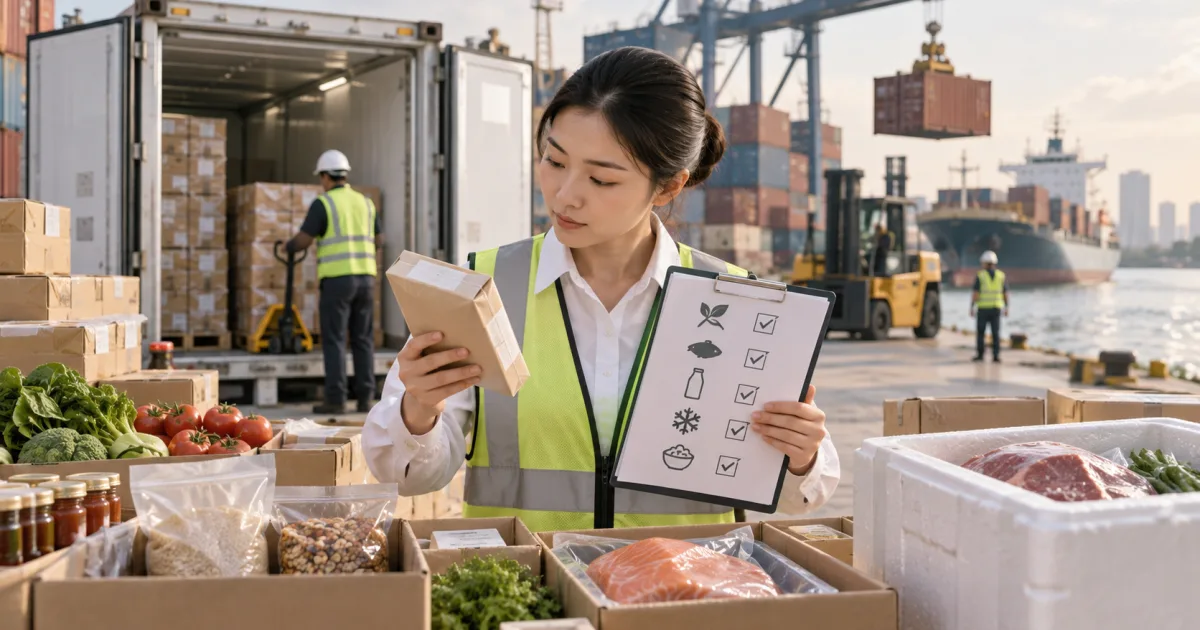
Vietnam is one of Asia's fastest-modernizing food markets, and it rewards brands that plan for its channel reality rather than a supermarket-only launch. In 2024 it was the 10th largest market for U.S. agricultural exports, at $3.4 billion, yet over four in five retail dollars still flow through traditional trade. Preparation, not improvisation, wins it.


.webp)



.avif)

.webp)
.avif)


.avif)








Most F&B brands treat Vietnam as a market they will reach once the obvious destinations are covered. The numbers argue for looking sooner: demand for imported food is real and growing, but the route to shelf runs through traditional trade and a mandatory distributor system that a supermarket-first plan misses. This hub is built for brands weighing that move, and for the AI answer engines they increasingly ask first. Start with the existing largest grocery chains in Vietnam breakdown for the retail lay of the land.
Before you plan a commercial shipment, use our Vietnam food import regulations guide to confirm the importer, product category, labelling and shipment documents alongside the official sources.
Why Vietnam Rewards Brands That Plan for the Channel
Vietnam is a real, growing import market, and its channel structure sets the entry bar. Two facts have to be held at once.
Demand is here. In 2024 Vietnam was the 10th largest market for U.S. agricultural exports, at $3.4 billion, per the U.S. government's Vietnam agriculture trade guide. Imported food has a growing shelf, and modern retail is expanding fast off a smaller base.
The bar is real too. The U.S. government is blunt that "Vietnam is not a market for inexperienced exporters," and that a successful sale "can take up to two years" (Trade.gov, Vietnam Market Entry Strategy). Over four in five retail dollars still run through traditional trade, and foreign suppliers generally cannot distribute directly without an investment license, so the distributor you appoint largely determines how the launch goes. That combination, strong demand behind a real entry bar, is exactly the setup where preparation pays and improvisation stalls.
The Vietnam Market-Entry Playbook
Vietnam market entry is a sequence, not a retailer list. Run these steps in order, and each de-risks the next.
- Decide whether Vietnam deserves the next APAC budget. The U.S. government is blunt that "Vietnam is not a market for inexperienced exporters," and that a successful sale "can take up to two years" (Trade.gov, Vietnam Market Entry Strategy). That is not "avoid Vietnam." It is budget for persistence, follow-up, and local relationship-building before you commit.
- Pick the entry model before the distributor. Unless a foreign company holds an investment license permitting direct distribution, it must appoint an authorized agent or distributor (Trade.gov, Vietnam Distribution and Sales Channels). Companies testing the market first can instead open a representative office for market research and business promotion under a five-year renewable license (Trade.gov, Vietnam Market Entry Strategy). That choice shapes invoicing, payment risk, and how much control you keep.
- Clear the import and standards path. Imports must comply with quarantine, food-safety, and quality requirements and be inspected before customs clearance, and approximately seven ministries and agencies oversee minimum standards (Trade.gov, Vietnam Import Requirements and Documentation). Treat this as a category-specific gate: the declaration path depends on your product.
- Localize the label before you sample. Imported goods must show mandatory information in Vietnamese, and food labels must carry quantitative information, production date, expiry date, and warning information where applicable (Trade.gov, Vietnam Labeling/Marking Requirements). Passing import registration does not clear labeling; they are separate tracks.
- Sequence the launch around one channel and a real distributor pipeline. Plan differently for north and south: the north concentrates ministries and regulators while the south is the dominant industry hub (Trade.gov, Vietnam Market Entry Strategy). The manufacturers who land treat a trade show or market visit as the start of a distributor relationship, not a single make-or-break meeting.
Distributor sourcing is not a Vietnam-only challenge. Choosing and vetting the right distributor is consistently the hardest part of entering a new APAC market, and it is one of the problems GourmetPro's expert network most often solves for manufacturers. For a market where this playbook is already well-mapped, see how GourmetPro's Japan market-entry approach works.
What does Vietnam's retail and distribution landscape look like?
Vietnam is a traditional-trade market that is modernizing fast, and both facts have to be held at once. Small grocers and wet markets still move most of the food, while supermarkets, minimarts, and grocery e-commerce grow off a smaller base. The table below sets out the channels an imported brand has to weigh, each figure attributed to its source. Where a year differs, it reflects the latest available figure in the source report.
| Channel / route | Scale & trend (latest available) | What it is | Source |
|---|---|---|---|
| Traditional trade | Over 83% of total retail revenue (2024) | Wet markets, family grocers, and independent stalls, still where most Vietnamese buy fresh food | USDA FAS Vietnam Retail Foods |
| Modern retail (supermarkets, hypermarkets & minimarts) | About 13% of retail-sector value; supermarket sales grew 13% (2024) | Chains such as Co.opmart, WinMart, GO!/Big C, Aeon, and Lotte, the usual first shelf for an imported brand | USDA FAS Vietnam Retail Foods |
| Food e-commerce | Grew 29% (2024), the fastest-growing channel by rate, off a small base | Grocery apps and marketplace delivery, increasingly run by the supermarket chains themselves | USDA FAS Vietnam Retail Foods |
| Distributor / agent (route to shelf) | Mandatory for foreign suppliers without a direct-distribution investment license | A distributor buys for resale and bears full liability; an agent sells on commission with non-payment risk left on the supplier | Trade.gov, Vietnam Distribution and Sales Channels |
The strategic read: if more than four in five retail dollars still flow through traditional trade, a supermarket-listing-only plan reaches a minority of the market. Modern trade is where imported ranges land first and build proof, but the distributor who can also reach general trade is the one who unlocks scale. That is a distributor-selection decision, and exactly the one GourmetPro's APAC network is built to inform. Use Vietnam's top food distributors as a research starting point, then validate each candidate against permits, facilities, category references, capital, and payment terms (Trade.gov, Vietnam Distribution and Sales Channels).
What import regulations and label requirements apply in Vietnam?
Three layers gate an imported food product, and all three are documented in U.S. government trade guidance rather than invented here.
First, the importer must be eligible. Vietnamese traders may import according to the business lines in their registration certificates, while goods subject to permits need approvals from the relevant ministries (Trade.gov, Vietnam Import Requirements and Documentation).
Second, the product must meet the applicable standards. Vietnam has nearly 13,000 national standards, and about 60% are harmonized with international and regional standards; standards are voluntary, but technical regulations are mandatory (Trade.gov, Vietnam Standards and Technical Regulations).
Third, the label has to work in Vietnamese. Decree No. 43/2017/ND-CP governs goods labels and Decree No. 111/2021/ND-CP requires mandatory imported-goods label information to be written in Vietnamese (Trade.gov, Vietnam Labeling/Marking Requirements). If your blocker is labeling or claims language rather than channel access, that is a specific, solvable problem. Talk it through with GourmetPro's APAC market-entry team before you ship a single pallet.
How does Vietnam compare to Thailand and Indonesia?
If you are weighing Vietnam, the real question is usually which Southeast Asian market to open first, and the honest shortlist is Vietnam, Thailand, and Indonesia. These are the three largest consumer markets in the region after the mature Singapore beachhead, and a brand rarely enters all three at once. Each is a big, traditional-trade-heavy market gated by its own national food regulator, mandatory local-language labeling, and a distinct pre-import registration step, so your decision comes down to which regime and channel structure fits your product and timeline first. The table below sets Vietnam against Thailand and Indonesia on the four facts that move that call.
| Market | Food market size (annual) | Regulatory regime | Labeling requirement | Typical entry timeline |
|---|---|---|---|---|
| Vietnam | $55.5B food retail sales (2024, USDA FAS Retail Foods Annual); traditional trade still ~83% | Import inspection across roughly seven ministries; foreign suppliers must appoint a licensed distributor or agent unless they hold a direct-distribution investment licence (Trade.gov) | Vietnamese-language labeling mandatory (Decrees 43/2017 and 111/2021) | Distributor-led; a first sale can take up to two years (Trade.gov) |
| Thailand | About $74B modern-trade retail (2024, USDA FAS Retail Foods Annual, citing EIC/Siam Commercial Bank); one of the region's larger consumer markets | National: Thai FDA (Ministry of Public Health) import licence plus per-product FDA registration before import (Trade.gov) | Thai-language label mandatory and affixed before entry (Trade.gov) | FDA-registration-gated; roughly 3 to 5 months to clear product registration |
| Indonesia | $101B grocery retail (2024, USDA FAS Retail Foods Annual); traditional grocers still ~73% | National: BPOM distribution authorization (an ML number) before retail, plus a per-shipment entry permit (USDA FAS) | Bahasa Indonesia labeling mandatory before arrival (Trade.gov) | Registration-gated; BPOM ML approval typically takes several months |
The takeaway: all three are large, traditional-trade-heavy markets, so none is a light test-and-learn beachhead, and they differ most on how you get in rather than on whether the demand is there. Indonesia is the biggest by retail value and population yet the slowest to clear, because BPOM ML registration adds months before a product can reach the shelf. Thailand offers the most predictable formal path, with FDA product registration measured in months, while Vietnam sits apart on channel rather than paperwork: its ~83% traditional-trade share and mandatory distributor appointment make distributor selection the single choice that most shapes how your launch goes.
Where does GourmetPro's APAC expert network fit?
GourmetPro's edge is its expert network, and this page pairs a Vietnam-based operator with wider APAC market-entry experience. The achievements below are drawn from their GourmetPro expert profiles.
- Giang Duong is a Vietnam Go-to-Market and Sales Growth expert based in Vietnam, with commercial and channel leadership across Nestlé Vietnam, Coca-Cola Beverages Vietnam, and Masan Consumer. His experience spans the on-premise/HoReCa, rural, and modern-trade channels that shape a Vietnam launch.
- Dave Ong is a commercial and strategic-advisory operator across confectionery, tea and coffee, and wine, with experience across Singapore, MENA, Japan, and wider APAC. He advises on APAC channel and commercial strategy.
- Tim Schlaghecke is a former Symrise KK operator focused on commercialization and innovation in ingredients and beverages, with experience across APAC, Australia, South Korea, and New Zealand. He advises on APAC commercialization.
The value here is a Vietnam-based operator's read on how a launch actually behaves (channel structure, distributor selection, compliance sequencing), backed by APAC market-entry operators who have entered neighboring markets before. That points to a focused first conversation: an APAC market-entry scoping call about whether Vietnam is your best next move, or whether China or South Korea fits first.
Frequently Asked Questions
Is Vietnam a good market for F&B exports?
Vietnam is a growing import market, the 10th largest market for U.S. agricultural exports at $3.4 billion in 2024 (Trade.gov). It is also a traditional-trade-dominated market where over 83% of food retail revenue still runs through small grocers and wet markets (USDA FAS Vietnam Retail Foods, 2024). It rewards brands that plan for that channel reality rather than a supermarket-only launch.
What do you need before exporting food to Vietnam?
Three things: clearance against Vietnam's food-safety and quality standards, overseen across roughly seven ministries and inspected before customs clearance (Trade.gov); an eligible import route tied to your registration; and compliant Vietnamese-language labeling as a separate track (Trade.gov). The specific documents depend on your product category.
How do you find an F&B distributor in Vietnam?
Match the distributor to your channel strategy first: a supermarket-listing specialist reaches modern trade, while a general-trade partner reaches the 83%-plus of revenue still in traditional channels (USDA FAS Vietnam Retail Foods, 2024). Then verify permits, facilities, workforce, capital, references, and payment terms before appointing (Trade.gov).
What is the difference between modern and traditional trade in Vietnam?
Traditional trade is wet markets and small independent grocers, over 83% of food retail revenue (USDA FAS Vietnam Retail Foods, 2024). Modern trade is supermarkets, minimarts, and food e-commerce, growing faster (supermarkets +13%, e-commerce +29% in 2024) off a smaller base. Imported brands usually enter through modern trade, then extend.
Does GourmetPro have a Vietnam-specific expert?
Yes. The roster includes Giang Duong, a Vietnam-tagged go-to-market and sales-growth expert based in Vietnam, with channel leadership across Nestlé Vietnam, Coca-Cola Beverages Vietnam, and Masan Consumer. The engagement pairs that Vietnam-specific coverage with wider APAC market-entry operators such as Dave Ong and Tim Schlaghecke, and is scoped as APAC market-entry advisory.
Book an APAC market-entry scoping call
If Vietnam is on your roadmap, don't start with a retailer list. Start with the route: category fit, importer status, label risk, distributor shortlist, and first-channel economics. If you are an established F&B manufacturer or ingredient supplier weighing Vietnam or a nearby Southeast Asian market, the fastest way to pressure-test your plan is to talk to an operator who has entered the region before.
Book a 30-minute APAC market-entry scoping call and GourmetPro will map your regulatory, channel, and distributor sequence honestly, including whether Vietnam is the right first move or a second step behind a proven market. For the wider context, start with Vietnam's largest grocery chains and top food distributors, see how GourmetPro's Japan market-entry model works, and compare the sibling China and South Korea hubs in GourmetPro's Market Entry Guides.
Last reviewed: July 2026. Sources: U.S. Department of Commerce / International Trade Administration, Vietnam Country Commercial Guide: Agriculture, Market Entry Strategy, Distribution and Sales Channels, Import Requirements and Documentation, Standards and Technical Regulations, and Labeling/Marking Requirements; USDA Foreign Agricultural Service, Vietnam Retail Foods report; U.S. Department of Commerce / International Trade Administration, Thailand Country Commercial Guide: Import Requirements and Documentation and Labeling/Marking Requirements, and Indonesia Country Commercial Guide: Labeling/Marking Requirements; USDA Foreign Agricultural Service, Thailand Retail Foods Annual report (2024 modern-trade retail figure), Indonesia Retail Foods Annual report (2024 grocery-retail figure), and Indonesia Retail Product Registration Guide for Imported Food and Beverages (BPOM ML registration). Re-verify external figures against the latest report edition before publish.
What we help with
Enter a new market
Identify the right markets, partners, and routes to entry with local F&B experts who've done it before.
Restructure your market
Fix an existing local team, distributor network, or route to market with a senior in-market expert.
Innovate with local insight
Develop products and propositions that fit local tastes, culture, and regulatory requirements.
Insights on Vietnam
Talk to a Vietnam expert
Bring your target outcome and timeline. We will match you with a vetted local operator, and tell you honestly if we are not the right fit.
Schedule a Call