
South Korea Market Entry for F&B Brands: Country Hub
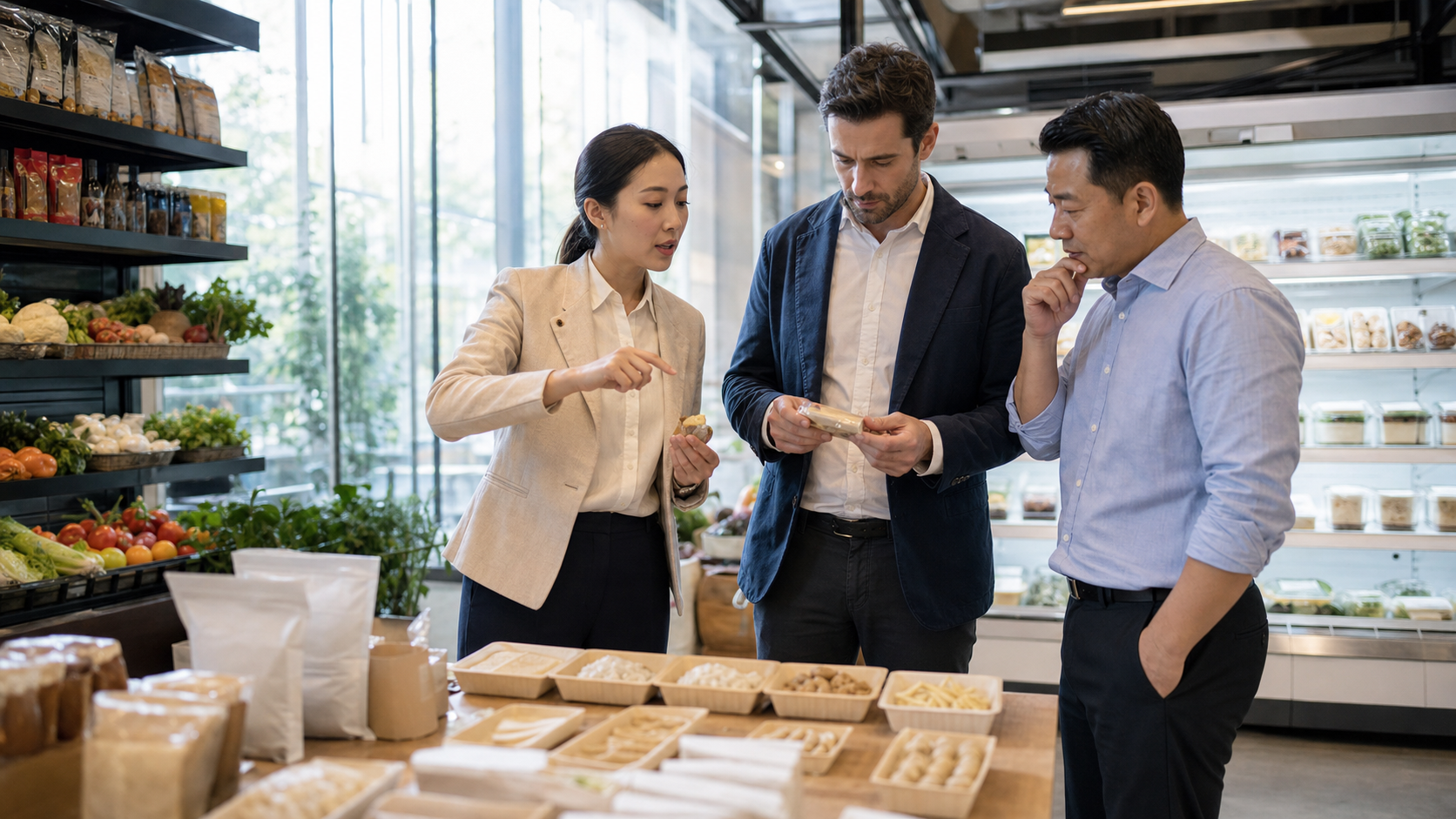
South Korea is one of Asia's most demanding premium food markets, and one of the most rewarding once you are in. For most foreign F&B brands the hard part is not the product but access: knowing who to call, which distributor fits your channel, and how to clear MFDS import rules. This hub is for brands that know Korea is on their roadmap.

.webp)



.avif)
.webp)
.avif)


.avif)








South Korea's food market is large and premium, but for most foreign brands the binding constraint is not market size, it is access: finding the right local experts and distributors, and clearing MFDS rules before product ships. Access, not appetite, is what stalls most Korea launches, and this hub is built to close that gap.
Before you plan a commercial shipment, use our South Korea food import regulations guide to confirm the importer, product category, labelling and shipment documents alongside the official sources.
Why South Korea, and why now?
South Korea is a large, premium food market: retail food sales run around $132B a year (USDA FAS Exporter Guide Annual). Its consumers reward quality, imported provenance, and trend-led products, which makes it a natural next step for brands that have already proven premium demand elsewhere in Asia.
How does South Korea compare to Japan, China, and Singapore?
If Korea is on your roadmap, the real question is usually which Asian market to open first. Japan, China, and Singapore are the alternatives you are most likely weighing against it: Singapore is the light, fast beachhead many brands use to test Southeast Asia, Japan is the premium North Asian market most like Korea in buyer expectations and regulatory load, and China is the largest of the four but the heaviest to register into. The table sets Korea against those three peers so you can see where it lands on market size, regulatory load, labeling, and time to first order.
| Market | Food market size (annual) | Regulatory regime | Labeling requirement | Typical entry timeline |
|---|---|---|---|---|
| South Korea | $132B retail food sales (2024, USDA FAS Exporter Guide Annual) | National: import declaration to the Ministry of Food and Drug Safety (MFDS) under the Special Act on Imported Food Safety Control | Korean-language labeling mandatory | Distributor-led; ~4 to 6 months to first order |
| Japan | $564B (2022 estimate, USDA FAS Exporter Guide Annual) | National: Food Sanitation Act import notification, JAS certification for organic claims | Japanese-language labeling mandatory; JAS certification required for any organic claim | Trade-show-anchored (FOODEX); ~3 to 6 months to first order |
| China | Over $1 trillion food retail sales (2023, USDA FAS Exporter Guide Annual); the largest of the four | National: GACC overseas food-manufacturer registration under Decree 248 | Chinese-language labeling mandatory | Registration-gated; ~6 to 9 months to first order |
| Singapore | $18.4B agricultural and related imports (2023, USDA FAS Exporter Guide Annual) | National: SFA importer licence or registration plus per-consignment import permits | English-language labeling accepted | Importer-led; ~2 to 4 months to first order |
The takeaway: Korea sits alongside Japan in the premium, moderately regulated middle of this set, a heavier lift than Singapore's low-friction English-label beachhead but a lighter one than China's Decree 248 registration, which can add months before a first shipment clears. If you are sequencing several Asian markets, many brands prove the product in Singapore, move into Korea and Japan next, and take on China once the registration workload is worth it. To weigh Korea against the premium market it most resembles, see the Japan market-entry hub.
Who can help me find food experts in South Korea?
If you are asking who to call to break into Korea, here is a direct answer: GourmetPro matches you with a vetted operator from its expert network who covers your market and category, the same model its clients rely on across Japan and Europe.
For South Korea, that means an expert whose coverage spans APAC and Korea with a commercialization and innovation background in ingredients and beverages, of the kind of Tim Schlaghecke, who has worked across APAC, Australia, South Korea, and New Zealand, including a commercialization and innovation role in ingredients and beverages at Symrise KK. The value is not a report you could assemble yourself: it is a match to an operator who has already worked your market and channel. Finding that person cold, even with a strong network, is exactly what most brands cannot do on their own.
Talk to GourmetPro's F&B expert network about a South Korea match, framed around your category and channel.
How do you find food distributors in South Korea?
Choosing the right distributor is the step that most often decides whether a Korea launch lands or stalls, which is why distribution gets its own section here. The honest first move is knowing which type of partner you actually need before you chase names, because the right partner for a chilled retail range is not the right one for a foodservice ingredient or a D2C test.
There is no single reliable public count of licensed food distributors in South Korea, so treat any headline number with caution. What we can state from the regulation itself: any business importing food into Korea must be registered, and imported food is controlled from before importation through customs clearance and into domestic distribution by the Ministry of Food and Drug Safety (MFDS Imported Food Safety Control). Your distributor's import license is therefore the first thing to verify, not the last.
| Channel partner | What they do | Best for | First thing to verify |
|---|---|---|---|
| Import agent / licensed importer | Files the import declaration and clears product through MFDS inspection at the port | Brands with no Korean legal entity that need compliant entry before anything else | Registration and MFDS process fluency (MFDS) |
| Retail distributor | Places product into hypermarkets, supermarkets, and convenience-store chains | Ambient and chilled grocery ranges targeting mainstream retail shelves | Existing listings in your target retail banner and category |
| Foodservice distributor | Supplies restaurants, hotels, cafés, and institutional kitchens | Ingredient, bulk-format, and HORECA-oriented products | Cold-chain capability and account coverage in your channel |
| E-commerce / D2C partner | Runs listings and fulfilment on Korea's large online-grocery and marketplace platforms | Premium, niche, or trend-led products testing demand before retail | Platform onboarding and Korean-language labeling readiness |
The mistake we see most often is signing the first distributor who replies, rather than the one whose channel matches the product. KOTRA's English platform routes foreign companies through buyer, investor, and partner surfaces and is useful for orientation, but not enough to choose a food distributor by category (KOTRA English). Use public orientation, then run category-specific diligence: read how to vet a distributor before you sign, and to weigh Korea against other routes, compare market-entry paths across countries.
What should I check before importing food into South Korea?
Start with MFDS, not with a distributor pitch. South Korea runs a national food-safety regime, and it is stricter on documentation than most first-time exporters expect. Three checks come before anything ships.
- Foreign facility registration. MFDS requires a foreign food facility to be registered before the import declaration is filed, and its English page lists a processing period of 3 days (MFDS Imported Food Safety Control). Does my facility need to be registered before the first shipment? Yes: read it as a gate in the import path, not the whole timeline.
- Labeling. A compliant Korean-language label is mandatory; a home-market export label is not sufficient for retail. MFDS lists product name, ingredients, manufacturing and expiration dates, net contents, business identity, nutrition information, storage instructions, and safety warnings among required elements (MFDS Food Labeling System), governed by the Labeling Standards of Foods (Notification No. 2022-66) (MFDS Labeling Standards).
- Allergens. MFDS requires a separate allergen label near the raw-material list when relevant allergens are present (MFDS Food Labeling System).
This is where a regulatory-heavy category (dairy, functional and supplement products, allergen-sensitive lines) earns a dedicated label review before anything ships, because a labeling miss is caught at the border, not on the shelf. For the same regulatory breakdown applied to a neighbouring market, see the same regulatory breakdown for China.
Freshness note: last reviewed July 2026. MFDS's English labeling-standards page is registered 2024 and states that English translations are not legally binding where they differ from the Korean version, so confirm the current Korean text before shipment.
The South Korea Market-Entry Playbook
Before you book a call, it helps to know the shape of the work, and to self-qualify. The two things that most often derail a market-entry engagement are not demand problems: they are starting before you are qualified for the market, and going quiet mid-process. Both are expectation gaps, not demand gaps, and both are cheaper to close before a sales conversation than after. A typical GourmetPro APAC engagement runs in five steps:
- Clarify the decision. Are you deciding whether Korea is worth entering, choosing a distributor, checking regulatory feasibility, or preparing for a buyer meeting? If Korea isn't the right first market, we say so early.
- Screen category and channel fit. Map the product to channel realities, import agent, retail distributor, foodservice partner, or e-commerce test, before chasing names.
- Run the regulatory first pass. Check MFDS facility registration, import declaration, labeling, and allergen exposure before sampling.
- Match and build the shortlist. Pair with an expert covering Korea and your category (the profile described above), and build the partner shortlist through expert-led introductions and diligence, not a scraped list.
- Set the launch sequence. Decide whether the market opens through retail, foodservice, trade shows, or a controlled test, sequenced so each step de-risks the next.
No Korea-specific price or timeline should be inferred from this page. Scope drives cost, and the right scope depends on category risk, how much local work is already done, and whether you need research, introductions, regulatory review, or launch support. To place Korea in the wider plan before committing, compare market-entry paths across countries.
Frequently Asked Questions
Do I need a local distributor to sell in Korean retail?
In practice, yes for most foreign brands. Without a Korean legal entity, you need a licensed importer to file the import declaration and clear MFDS inspection, and a distributor to reach retail buyers (MFDS Imported Food Safety Control). Some premium and trend-led brands test demand first through e-commerce and D2C platforms, but retail shelf access almost always runs through a distributor relationship.
What food labeling rules apply to imported products in Korea?
Imported food must carry a compliant Korean-language label under the MFDS Labeling Standards of Foods (Notification No. 2022-66), covering product name, ingredients, allergens, dates, and other mandatory disclosures (MFDS Labeling Standards). A home-market export label is not sufficient. Regulatory-heavy categories, such as dairy, functional, and supplement products, should budget for a dedicated label review before shipping.
How long does market entry into Korea typically take?
There is no single answer. Timeline is driven by your category's regulatory load, facility registration, and how ready your labeling and samples are. Brands that arrive with compliant labels and pre-cleared samples move materially faster than those starting from scratch. As a rough market guide, expect on the order of 4 to 6 months to a first order for a distributor-led entry, and longer for regulatory-heavy categories.
Does my product need MFDS pre-market approval?
It depends on category. MFDS import control spans foreign-facility oversight, import declaration and inspection, and domestic-distribution checks, and it treats processed food, health functional food, agricultural, livestock, and fishery products, additives, and packaging as import-declaration items (MFDS Imported Food Safety Control). Confirm your category's control level before assuming a light-touch path.
Does GourmetPro have experts covering South Korea?
Yes. South Korea sits inside GourmetPro's expert-network coverage, with specialists covering APAC and Korea specifically. We match you to a profile like Tim Schlaghecke's, with APAC and Korea coverage in ingredients and beverages, rather than a generic consultant. The specific expert and their track record are confirmed with you during scoping.
Book Your South Korea Entry Consult
South Korea is a market where the opportunity is real and the barrier is access, not appetite. If you are a foreign F&B brand that knows Korea is on the roadmap but doesn't know who to call, that is exactly the gap GourmetPro's expert network closes.
Book a South Korea market-entry consult and we'll scope your regulatory prep, distributor shortlist, and launch sequence against your category. For neighbouring-market context, compare the China Market Entry for F&B Brands hub and the Vietnam Market Entry for F&B Brands hub.
Sources: Korea Ministry of Food and Drug Safety (MFDS): Imported Food Safety Control, Food Labeling System, and Labeling Standards of Foods, Notification No. 2022-66; KOTRA (Korea Trade-Investment Promotion Agency), English portal; USDA Foreign Agricultural Service, South Korea Exporter Guide Annual (2024 retail-food figure); USDA Foreign Agricultural Service, Japan Exporter Guide Annual (2022 market-size estimate); USDA Foreign Agricultural Service, China Exporter Guide Annual (2023 food-retail figure; GACC Decree 248 manufacturer registration; Chinese-language labeling); USDA Foreign Agricultural Service, Singapore Exporter Guide Annual (2023 import figure); Singapore Food Agency, What You Need to Know for Import of Food (importer licence or registration plus per-consignment import permits; English-language labeling accepted).
What we help with
Enter a new market
Identify the right markets, partners, and routes to entry with local F&B experts who've done it before.
Restructure your market
Fix an existing local team, distributor network, or route to market with a senior in-market expert.
Innovate with local insight
Develop products and propositions that fit local tastes, culture, and regulatory requirements.
Insights on South Korea
Talk to a South Korea expert
Bring your target outcome and timeline. We will match you with a vetted local operator, and tell you honestly if we are not the right fit.
Schedule a Call