On this page
Choose a UK food distributor by starting with the customer and channel you need to reach, then test whether a candidate can do the specific commercial and operational work required. A familiar company name or broad claim of national coverage does not show that the distributor serves your category, temperature regime, target accounts or launch stage.
This six-step guide is for food and beverage manufacturers comparing direct retail supply, importer-led routes, wholesalers and distributors. Use it to write a clear partner brief, challenge vague proposals and run a limited trial before committing more stock or territory.
1. Choose the Channel Before the Distributor
Decide where the product should sell before building a company list. A foodservice distributor needs operator demand, suitable pack sizes and kitchen economics. An independent-retail wholesaler needs retail-ready cases, clear shelf pricing and a reason for store owners to reorder. A supermarket route may involve a direct country buying team, an importer or a distributor, depending on the product and the retailer.
Use the UK supermarket buying map to distinguish retail groups, banners and buying routes before assuming a distributor can reach the relevant buyer.
Write the first brief around one priority channel and a named customer type, such as premium independent grocers in London and the South East, casual dining operators in Great Britain, or convenience stores in Northern Ireland. If several channels matter, state the different packs, prices and sales plans for each.
| Role | What the role usually does | What the manufacturer should confirm |
|---|---|---|
| Manufacturer | Makes and supplies the product | Capacity, product specifications, certifications and launch support |
| Importer | Manages or takes responsibility for bringing goods through the relevant import route | Contracting entity, declarations, product-specific requirements and records |
| Distributor | Represents and/or resells products into agreed accounts | Named channels, active territory, sales effort, reporting and stock ownership |
| Wholesaler | Stocks a range and supplies trade customers | Depots or delivery routes, buyer ownership, range review and sell-through support |
| Retailer | Sells products to consumers through stores or online | Country, banner, category buyer and contracting route |
| Broker | Introduces or represents a brand without necessarily buying stock | Fee or commission, authority, account ownership and handoff after an introduction |
| Logistics provider | Stores and transports goods | Temperature control, service levels, traceability and whether it takes any commercial role |
One company can perform several roles. Record each legal and commercial responsibility in the contract rather than assuming that a distributor is also the importer, sales team or logistics provider.
2. Assign Import and Food Business Responsibilities
Use our UK food import regulations guide to separate Great Britain and Northern Ireland requirements and agree the product-specific shipment checklist with your prospective importer.
Before agreeing prices or exclusivity, identify the party that will manage import declarations, product-specific checks and the UK food-business duties that apply to its activity. The official UK import service distinguishes goods entering Great Britain from routes involving Northern Ireland and walks businesses through declarations, commodity codes, licences or certificates, labelling and records. The government maintains separate Northern Ireland guidance, including links for agri-food and drink movements.
Requirements vary by origin, destination and product. Use the official journey for the exact route and obtain specialist advice where needed. Ask the prospective partner:
- Which legal entity buys the goods and which party is responsible for the import declaration?
- Does the proposal cover England, Scotland and Wales, Northern Ireland, or both routes?
- Who checks product-specific licences, certificates, composition and label requirements before shipment?
- Who retains customs, supplier, customer and traceability records?
- Who leads a withdrawal or recall and how quickly can affected stock and customers be identified?
UK guidance says businesses that sell, store, handle or distribute food have responsibilities for food safety, accurate labelling, traceability and withdrawal or recall. Review the current food-business responsibilities with the partner and put the agreed owner for each task in writing.
3. Match Coverage, Category and Operating Fit
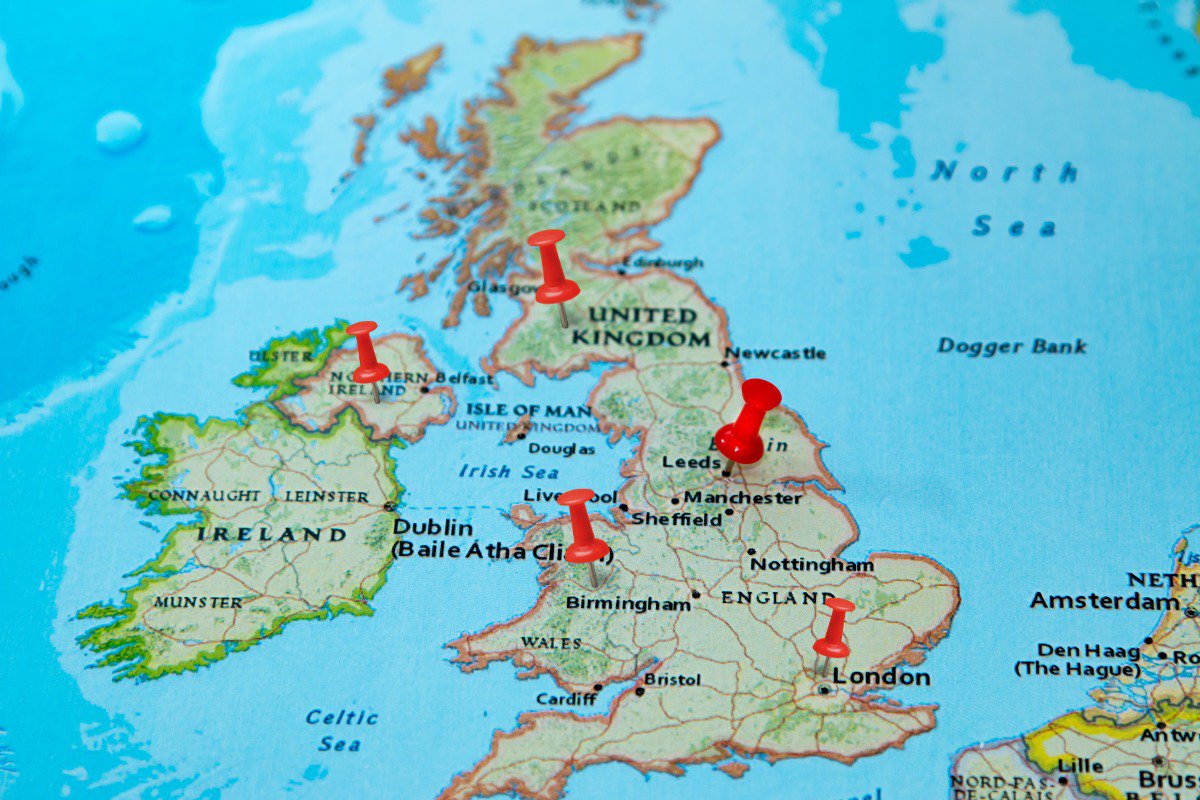
Translate broad sales claims into evidence relevant to your launch. Ask for the postcodes, depots or delivery routes that cover your priority accounts and whether listings are decided nationally, regionally or by branch. Treat Great Britain and Northern Ireland separately where operations or import routes differ.
Then test category and operational fit. A credible candidate should be able to discuss adjacent products, customer type, buying cycle, storage temperature, remaining shelf life on delivery, case and pallet format, minimum order, lead time, technical approval, traceability and recall process. Ask what trial evidence would justify wider distribution: named target accounts, samples accepted, initial orders, reorder rate, sales per outlet or another measure suited to the channel.
Account access also needs precision. A distributor that supplies a retailer does not automatically have a route to every category buyer or a right to list a new brand. If you plan to supply a large retailer directly, the Groceries Code Adjudicator regulates relationships between designated retailers and their direct suppliers. That scope does not convert an intermediary arrangement into a direct retailer relationship.
4. Model Margin, Working Capital and Risk
Build the economics from the shelf or menu price back to your factory price. Include importer and distributor margin, retailer or operator margin, freight, duty and taxes where applicable, storage, pick and delivery charges, listings, promotions, samples, rebates, returns, damages and currency exposure. Ask whether quoted prices are delivered or collected and which costs can change after the first order.
Cash timing matters as much as headline margin. Compare production lead time, payment terms, minimum order, safety stock and expected sell-through. Model a slow launch and an agreed promotion, not only the target case. This shows how much working capital is tied up and who bears the cost of short-dated, returned or discontinued stock.
Use the model to agree a gross-to-net view for each channel. If the route cannot support the intended consumer price and enough contribution for every party, more geographic coverage will not solve the problem.
5. Agree Launch Ownership, Exclusivity and Exit Terms
A distribution agreement should state what happens after delivery. Name the party responsible for category-buyer outreach, account meetings, samples, trade marketing, promotions, forecasting, product data, sales reports and replenishment. Set a regular review using measures that the distributor can actually report.
Ask for evidence behind any request for exclusivity. Define the territory as Great Britain, Northern Ireland or specific regions; define the channel and products covered; set target accounts or sales milestones; and include review, cure and termination terms. A time-limited trial with a small number of target accounts can test service, reporting and reorder performance before either party makes a wider commitment.
Also document who owns retailer relationships and customer data if the agreement ends, how remaining stock will be handled, and whether the manufacturer may appoint another partner for channels the distributor does not actively serve.
6. Build and Test a UK Distributor Shortlist
Create a scorecard from the five steps above and apply it consistently. A compact first comparison can cover:
- priority channel and named customer type;
- Great Britain, Northern Ireland and regional delivery coverage;
- category, storage temperature and shelf-life fit;
- import, technical, traceability and recall responsibilities;
- landed economics, payment terms, returns and working-capital exposure;
- named sales activity, reporting, milestones, exclusivity and exit terms.
| Decision area | Evidence to request | Pause the process when |
|---|---|---|
| Channel and coverage | Named customer types, target accounts and postcode or depot reach | The proposal relies on broad “national” or “all channels” claims |
| Category and operations | Adjacent range, storage capability, shelf-life rule and onboarding steps | The candidate cannot state the technical or service requirements |
| Commercial model | Landed margin, payment terms, returns, promotions and stock ownership | The model does not work in a slow-launch case |
| Launch and data | Named account plan, activity owner, reporting cadence and milestones | Sales activity and results cannot be measured |
| Contract | Territory, channel, products, exclusivity, review and exit terms | Requested exclusivity is wider than the evidence of active coverage |
Use the distributor toolkit to record the scorecard, prepare the supplier pitch and structure outreach.
Use our UK food distributor shortlist to identify companies across national foodservice, wholesale, independent retail and regional routes. Verify current fit directly because ranges, buyers and delivery territories change.
GourmetPro can help manufacturers define the route, research and approach candidates, and structure commercial discussions through our distributor and partner search. For wider country context, see our United Kingdom market page.
FAQs About Choosing a UK Food Distributor
Q1. Is There One Largest Food Distributor in the UK?
There is no single answer that is useful across every channel and measure. A business may be large by group revenue, depot network, delivered foodservice sales or wholesale customers, and those measures do not show whether it is the right partner for a particular brand. Compare relevant operators by channel, territory, category fit and willingness to support the launch.
Q2. How Many UK Food Distributors Should I Shortlist?
There is no fixed number. Start with enough credible candidates to compare different routes, then narrow the list through evidence. A focused shortlist might include a national broadliner, a regional operator and a category specialist if all three match the target channel. Remove any candidate that cannot name the responsible buyer, actual coverage or requirements for a trial.
Q3. Should I Use a Wholesaler or a Distributor?
Choose based on the work required. A wholesaler can provide stocked access to trade buyers, while a distributor may take a more active sales or brand-representation role. In practice, labels overlap. Compare the contract: who buys stock, who sells to named accounts, who manages imports and logistics, what data is shared, and what launch activity is guaranteed.
Sources checked 14 September 2026: GOV.UK import steps, GOV.UK Northern Ireland goods guidance, GOV.UK food-business responsibilities and the Groceries Code Adjudicator.