
Singapore Market Entry for F&B Brands: Country Hub
Singapore is one of Asia's most import-receptive food markets and a practical first beachhead for brands testing the region. Entry runs through three modern-trade chains, NTUC FairPrice, Cold Storage, and Giant, and through import compliance enforced by the Singapore Food Agency. Get the distributor and the SFA classification right and it becomes a clean APAC proof point.


.webp)



.avif)

.webp)
.avif)


.avif)








Singapore is rarely the biggest market on an exporter's Asia list, but it is often the smartest place to start. It sits one decision away from Japan: smaller, faster to test, and useful when you want an APAC proof point before you widen the plan. For a prepared brand, that makes it a beachhead, not an afterthought.
Before you plan a commercial shipment, use our Singapore food import regulations guide to confirm the importer, product category, labelling and shipment documents alongside the official sources.
Why is Singapore a bridgehead market, not an afterthought?
Because it is the lightest way into Asia for a brand that wants proof before scale. Singapore is import-receptive, concentrated enough to read quickly, and accepts English-language labeling, so a prepared brand can test its product, distributor story, and retail economics without the heavier compliance load of a market like Japan or China.
Brands weighing a Japan launch often look at Singapore first for exactly this reason: the two decisions tend to sit in the same board conversation, and Singapore answers the cheaper question first. The table below sets the two markets side by side on the dimensions that actually decide entry.
| Dimension | Singapore | Japan |
|---|---|---|
| Import regime | SFA importer licence or registration, plus per-consignment import permits | Food Sanitation Act import notification to MHLW |
| Labeling | English-language labeling accepted | Japanese-language labeling mandatory |
| Typical timeline to first order | ~2 to 4 months | ~3 to 6 months |
| Primary entry channel | Importer-led into modern trade | Layered importer-to-wholesaler tiers |
The honest takeaway: Singapore is not where you chase scale first. It is where you test whether your product, distributor story, and retail economics can survive a sophisticated import market before you commit to a larger regional push. Japan's fuller playbook is a separate hub; this page is built to sit beside it.
Is Singapore a good market to enter for food and beverage brands?
Yes, if the goal is a controlled APAC entry rather than instant mass-market volume. Singapore is one of Asia's most import-dependent food markets: it brought in roughly $18.4B in agricultural and related imports in 2023 (USDA FAS Exporter Guide Annual), and English-language labeling is accepted, which lowers the friction of a first shipment. That makes Singapore import-receptive, but it does not remove the commercial gates.
The gates are channel access and partner fit. Singapore turns both into one operating question: which distributor can handle import compliance, modern trade, premium retail, and the first shelf conversation without locking you into the wrong regional route? Answer that well and the rest of the entry gets easier; answer it badly and a clean compliance file still stalls on the shelf.
What does Singapore's retail landscape actually look like?
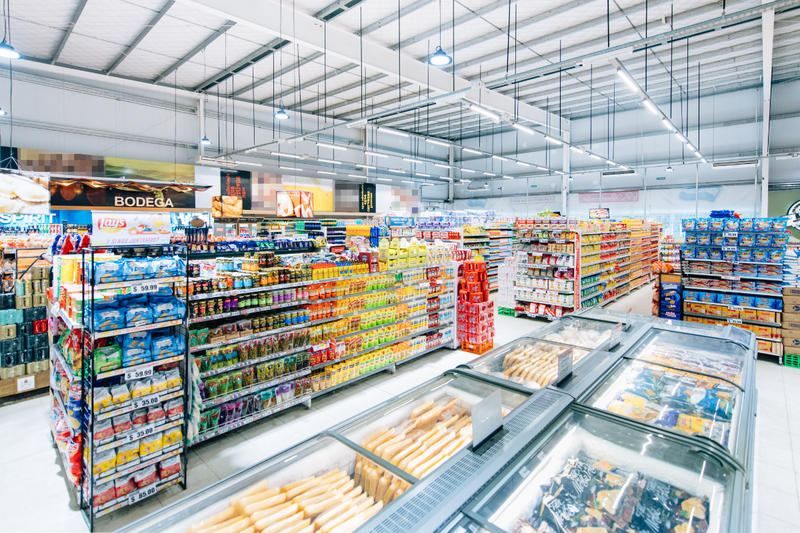
The market is concentrated enough to make entry readable, but not simple. Three chains dominate modern trade: NTUC FairPrice, Cold Storage, and Giant. For a brand owner, the useful distinction is not "supermarket versus distributor." It is whether your first partner can reach the right format: mainstream grocery, premium imported shelves, specialty retail, foodservice, or a controlled test.
For the supermarket map, start with Singapore's biggest supermarket chains. For the partner map, use Singapore food & beverage distributors before you sign exclusivity.
How does Singapore compare to Malaysia and Thailand?
If you are choosing where to land first in Southeast Asia, Singapore, Malaysia, and Thailand are the three markets that usually make your shortlist. They sit close together, are often served by overlapping regional distributors, and a brand weighing one is almost always weighing the other two. Where they diverge is the part that decides your entry: how much the market imports, how heavy the regulatory approval is, and whether the label you already print can travel. The table sets the three side by side on exactly those axes.
| Market | Food market size (annual) | Regulatory regime | Labeling requirement | Typical entry timeline |
|---|---|---|---|---|
| Singapore | $18.4B agricultural and related imports (2023, USDA FAS Exporter Guide Annual) | National: SFA importer licence or registration plus per-consignment import permits; no pre-market product registration for ordinary food | English-language labeling accepted | Importer-led; roughly 2 to 4 months to a first order once an importer is appointed |
| Malaysia | $25B total agricultural and related product imports (2024, USDA FAS Exporter Guide Annual) | National: Ministry of Health Food Safety and Quality Division under the Food Act 1983 and Food Regulations 1985; halal certification required or strongly expected for most foods | Bahasa Malaysia or English accepted on imported food | Importer-led once a licensed local importer is appointed; halal certification adds lead time for most categories |
| Thailand | $8.4B consumer-oriented food imports (2024, USDA FAS Exporter Guide Annual) | National: Thai FDA import licence, with product registration and an FDA serial number for specifically controlled and standardized foods | Thai-language label mandatory, affixed before the goods enter | Registration-gated; the FDA product-registration and pre-entry Thai-label steps make it the heaviest pre-market load of the three |
The takeaway: for a first Southeast Asian entry, Singapore is the lowest-friction of the three, because it imports almost everything it eats, accepts an English label, and clears goods on per-consignment permits rather than pre-market product registration. Malaysia is the larger import market and just as open on label language, but halal certification is the gate that sets your timeline for most categories. Thailand is the most protected of the three, with Thai FDA product registration and a mandatory Thai label, so it tends to reward a later, more committed entry once Singapore has proven the product.
The Singapore Market-Entry Playbook
Work the entry as four sequenced workstreams: regulatory approval, distributor selection, retail negotiation, and in-market sampling. The order matters because each workstream exposes a different bottleneck.
- Regulatory approval. Confirm product classification and import requirements with the Singapore Food Agency before you send commercial samples. In practice the importer of record is a Singapore-registered entity, usually your distributor, so this step is tied to the distributor decision below.
- Distributor selection. Do not pick the biggest name by default. Pick the partner whose channel coverage matches the product and whose importer role is clear. This is the single choice that most often decides whether the rest of the entry moves or stalls.
- Retail negotiation. Decide whether the first pitch is modern trade, premium specialty, foodservice, or a controlled proof run. A distributor with weak buyer pull creates a stall even when the compliance work is clean.
- In-market sampling. Treat sampling as a buyer-readiness test, not a tasting exercise. Label, price, claim, and channel story need to match the buyer before the product reaches the room.
Where do brands actually get stuck?
Most brands stall in the same place: between research and a real partner. A supermarket list tells you where your product might end up. A distributor diligence process tells you whether it can actually get there, who holds the importer role, and whether the first partner can reach the retail format your product needs.
So work the distributor question before the supermarket list. That is why this hub links to distributors first and supermarkets second: a shelf you cannot reach is not a plan, and a strong distributor is what turns interest into a first order.
Who reviews Singapore market-entry strategy?
This page is assigned to Dave Ong for expert review. Dave advises across Singapore, MENA, Japan, and the wider APAC region on commercial and strategic entry, with category depth in confectionery, tea and coffee, and wine.
The practical point: Singapore entry should be judged by someone who has seen APAC distribution decisions from the inside, and whose coverage spans both Singapore and Japan, the exact pairing a brand planning an APAC rollout is weighing. A generic APAC deck will not tell you whether a Singapore distributor is a proof-market partner, a foodservice specialist, or a regional-rights trap. That is the difference an operator who has entered the market before makes.
Frequently Asked Questions
Who regulates food imports into Singapore?
The Singapore Food Agency (SFA) is the national authority for food safety and imports; commercial importers must clear SFA requirements before a product can be sold (SFA import guidance). For ordinary food imports, SFA handles classification, importer licence/registration, and import permits; products at the food-health-product interface may fall under either SFA or HSA, so confirm which body owns your category before you plan the launch.
Do I need a local importer before selling food in Singapore?
In practice, yes. Commercial importers follow SFA food-import requirements, and the importer or distributor is usually the party responsible for import clearance and category-specific documentation (SFA import guidance). Confirm the importer role before you discuss shelf access.
Which supermarket chain should imported F&B brands target first?
There is no universal first chain. NTUC FairPrice, Cold Storage, and Giant are the three chains that dominate Singapore's modern trade, but the right first route depends on category, price point, shelf life, claim risk, and whether the brand belongs in mainstream grocery, premium retail, or foodservice.
How long does Singapore food market entry take?
As a general market-guidance estimate, plan for roughly 2 to 4 months to a first order once an importer is in place, though the real variable is sequence rather than the calendar. The work usually stalls when the steps happen out of order: compliance first, distributor fit second, retail negotiation third, sampling fourth. Keep them in that order and the timeline holds; scramble them and it stretches.
Is Singapore better than Japan for a first APAC launch?
It depends on what you need first. Japan is the larger, more premium market, but it carries a heavier entry load: mandatory Japanese-language labeling and a layered wholesale system that rewards the right introductions. Singapore is lighter, with English-language labeling accepted and an importer-led route, which makes it the better choice when you need a smaller, import-receptive proof market before a broader APAC push.
What should I prepare before a Singapore distributor call?
Bring the product classification, draft label, target channel, desired retail format, pricing logic, and your position on exclusivity. If you cannot answer those before outreach, read the Singapore food & beverage distributors guide first, then book a scoping call through contact.
Book your Singapore entry consult
Singapore is a useful APAC bridgehead when the work is scoped tightly: SFA compliance, distributor fit, modern-trade route, and sampling plan. It is a weak bet when treated as "Asia, but smaller."
Book a 30-minute Singapore market-entry consult and bring the product, target channel, and distributor decision you need to make. We will tell you whether Singapore should be your proof market, whether Japan should come first, and which partner questions need answering before you spend budget.
Sources: Singapore Food Agency, What You Need to Know for Import of Food for Commercial Sale and official site; USDA Foreign Agricultural Service, Singapore Exporter Guide Annual (2023 agricultural import figure); USDA Foreign Agricultural Service, Malaysia Exporter Guide Annual (2024 agricultural import figure); USDA Foreign Agricultural Service, Malaysia FAIRS Country Report Annual (MOH Food Safety and Quality Division under the Food Act 1983 and Food Regulations 1985; halal certification; Bahasa Malaysia or English labeling); USDA Foreign Agricultural Service, Thailand Exporter Guide Annual (2024 consumer-oriented import figure); Thailand Food and Drug Administration, Food Importation (import licence and FDA serial number for controlled foods); U.S. Commercial Service, Thailand Labeling/Marking Requirements (mandatory Thai-language label).
What we help with
Enter a new market
Identify the right markets, partners, and routes to entry with local F&B experts who've done it before.
Restructure your market
Fix an existing local team, distributor network, or route to market with a senior in-market expert.
Innovate with local insight
Develop products and propositions that fit local tastes, culture, and regulatory requirements.
Insights on Singapore
Talk to a Singapore expert
Bring your target outcome and timeline. We will match you with a vetted local operator, and tell you honestly if we are not the right fit.
Schedule a Call