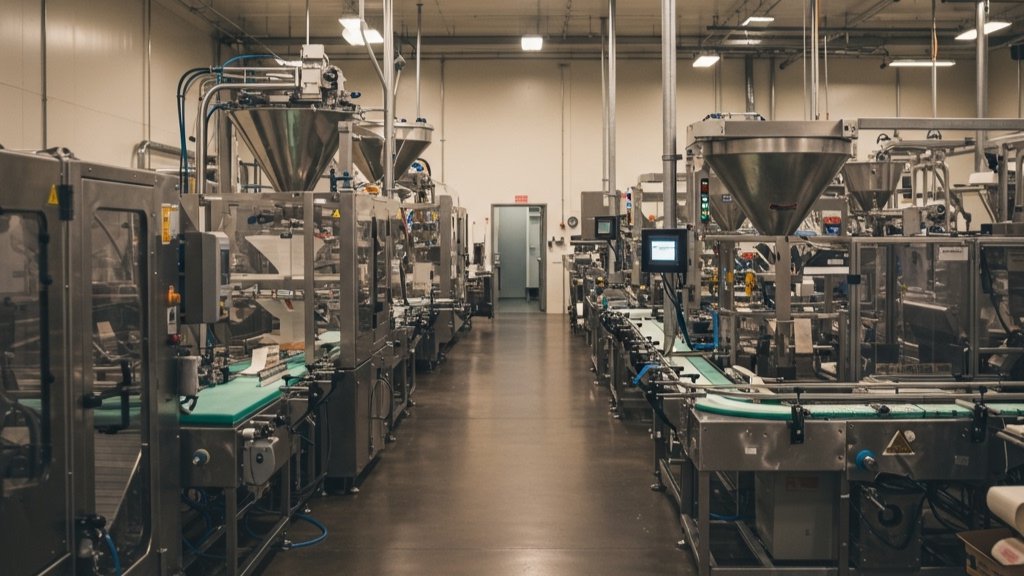
The most expensive flight I ever booked wasn’t a vacation to the Alps. It was a last-minute red-eye to a contract manufacturing facility in Ohio that had assured me—in writing, repeatedly—that they could hit our tray sealing specs at scale. I arrived to find a line that wasn't just struggling; it was effectively held together with duct tape and optimism.
In food operations, the gap between a glossy capabilities deck and the reality of the production floor is where margins (and careers) go to die. We live in a landscape where capacity is tight, labor is tighter, and sales teams will promise physics-defying throughput just to get you to sign the LOI.
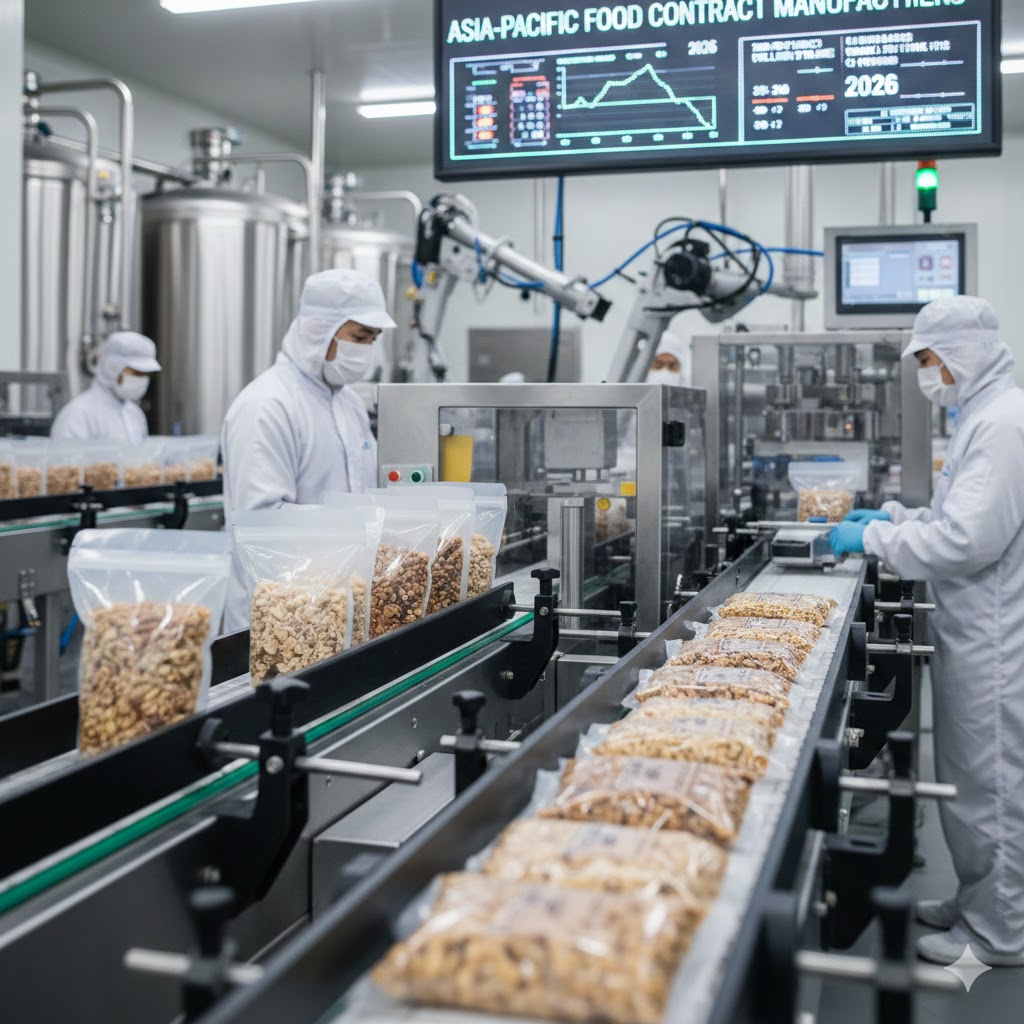
You don’t need a phonebook of every facility with a business license. You need to know who can actually execute in 2026. I’ve filtered the noise to bring you the partners who treat your SOPs as law, not suggestions. Here is the shortlist.
Major US Food Contract Manufacturers Directory
Early in my career as an Operations Director, I treated partner sourcing like a treasure hunt. I convinced myself that if I just dug deep enough, I’d find a "unicorn" partner who offered the massive scale of a multinational and the flexibility of a startup. That was a mistake. I eventually learned that sourcing isn't a treasure hunt; it is a trade-off. In practice, you usually face two choices: access massive scale with strict Minimum Order Quantities (MOQs), or prioritize flexibility and easier QA (Quality Assurance) access with regional players. This section serves as a vetting longlist of food contract manufacturers. It is not an endorsement. I don’t define "major" by who has the flashiest website or the most Instagram followers. I define it by capacity and footprint—filtering for active facilities that can actually handle volume. This isn't just a generic manufacturer directory; it’s a breakdown of the partners that keep the American food supply chain moving.
National Scale Contract Manufacturing Partners
When you approach the top food companies in the us for contract work, you aren't just buying line time; you are buying into a rigorous, often inflexible infrastructure. These partners are the backbone of the industry, designed for established brands moving millions of units annually. I learned the hard way that these giants do not "work with you" on spec. Years ago, I approached a national bar manufacturer with a pilot concept, assuming my "projected volume" would win them over. I was laughed out of the room. I realized then that "National" implies stricter credit terms and MOQs that often start in the hundreds of thousands. Conversely, if you are already moving volume, these are the few food contract manufacturers capable of stabilizing your supply chain without blinking. Below is a company list of heavy hitters that dominate the domestic landscape:
Company Name |
HQ State |
Primary Capabilities |
Certifications & Focus |
|
Hearthside Food Solutions
|
IL |
Bars, Snacks, Cookies, Crackers |
SQF Level 3 (the "PhD" of food safety audits), Gluten-Free, massive
scale bar production.
|
|
TreeHouse Foods
|
IL |
Private Label, Beverages, Dressings
|
Broad spectrum private label; huge focus on retail store brands and
snacking categories.
|
|
Kerry Group
|
WI (US HQ) |
Ingredients, Flavors, Functional Foods
|
Heavy R&D focus; integrated ingredient solutions for functional
brands.
|
|
Schreiber Foods
|
WI |
Dairy, Yogurt, Cream Cheese |
Private label dairy giant; heavily automated processing lines.
|
|
Simmons Foods
|
AR |
Poultry, Pet Food |
Vertical integration in poultry; specialized protein processing.
|
Engaging these giants requires your house to be in perfect order. They execute what you specify—down to the exact gram—across their network of us food manufacturers.
Regional and Mid-Market Players
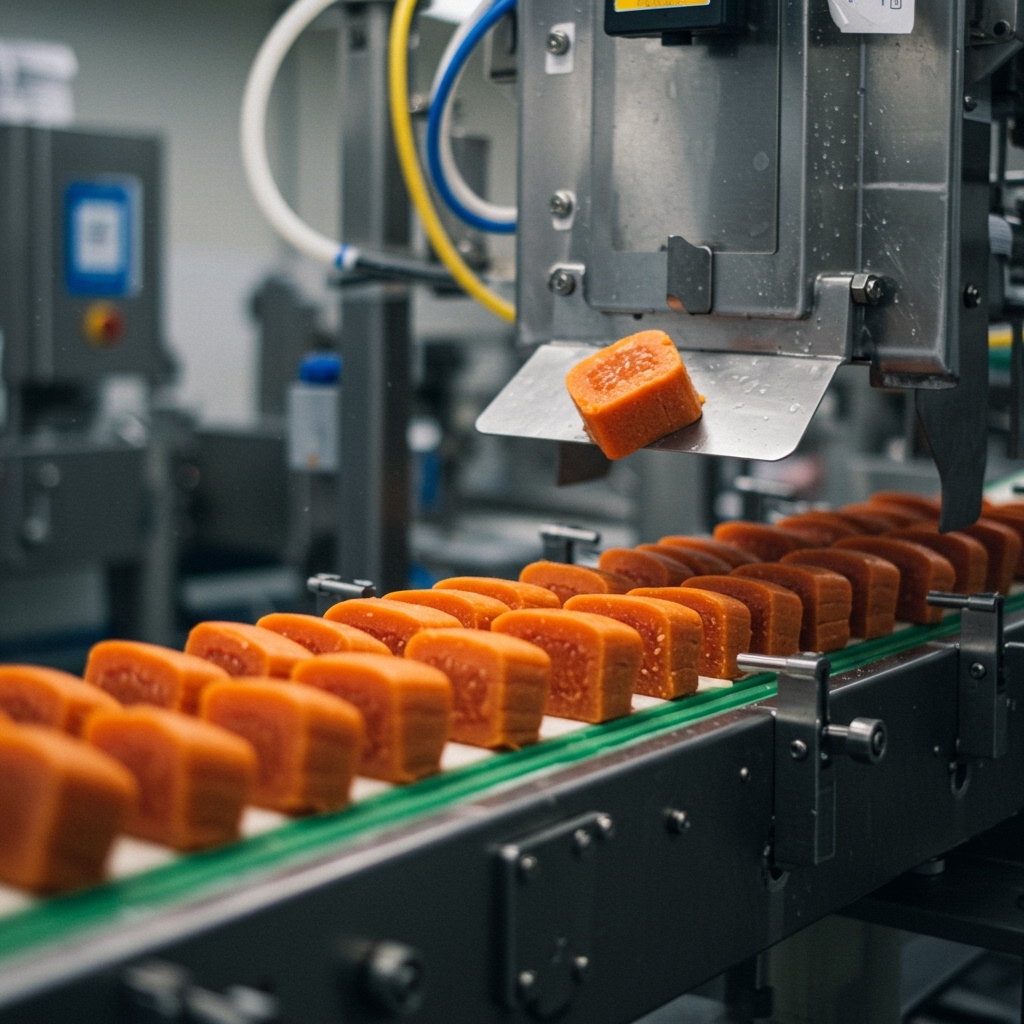
While the national giants offer volume, the regional tier offers agility. In my experience, the "Mid-Market" is the sweet spot for growing brands. These are the us food manufacturers that might actually return your phone call if your opening order is under 50,000 units. The primary advantage here is what I call the "Proximity Factor." I once had a production run at a facility four hours away where the vertical seal on our pouches started popping open. Because I could drive there instead of waiting for a flight, I was on the production floor with the plant manager by noon. We adjusted the dwell time on the jaws and saved the run. If I had been working with a national partner across the country, that entire batch likely would have been scrapped before I even landed. Easier access for QA visits equates to faster problem solving and less dead inventory. Mid-market players often possess lower overhead structures, allowing for better unit economics on medium runs. They are the engine of this database of manufacturers, often willing to negotiate pilot runs that a Hearthside or TreeHouse would reject outright.
- Agility: Faster changeovers allow for more SKUs (Stock Keeping Units, or distinct flavor varieties) on the same line.
- Access: You are more likely to speak with the owner or plant manager directly, rather than a junior account rep.
- Transparency: There are fewer corporate layers between your R&D team and the production floor.
If you are building your own internal manufacturer directory, I recommend starting by mapping players within a 300-mile radius of your distribution hub. The logistics savings and the ability to put eyes on the line often outweigh the pennies you might save per unit by going national too early. As you build your list of food contract manufacturers, remember that the best partner is the one that fits your current stage, not just your future ambition.
WEST
- Operates
-
Ontario, CA (bars); Anaheim, CA (powders); Salt Lake City, UT (powders)
- Capabilities
-
Nutritional bars (layered, extruded, enrobed), functional powders,
bites; flow-wrap, pouches, canisters
HACCPGluten-FreeNon-GMOKosherHalalOrganic
North America's largest dedicated nutrition bar & powder
co-manufacturer. 300k-sq-ft Ontario facility with segregated allergen
lines. $70M+ invested in modern plant. Best for brands needing scaled
bar/powder production.
- Operates
- Pasco, WA; Moses Lake, WA; Albany, OR; Chehalis, WA
- Capabilities
- Private-label frozen vegetables, fruits, blends; IQF processing
Not stated (GFSI expected per retail partners)
Founded 1912. One of the Pacific Northwest's largest frozen produce
processors. Grows, packs, and ships year-round. Ideal for retailers and
brands needing private-label frozen veg.
- Operates
- Single facility, Los Angeles metro area
- Capabilities
-
Protein bars, bites, balls, nut-butter-filled bars, snacks; full-service
R&D through packaging
SQF Level 2KosherOrganicNon-GMO Project Verified
Specialist bar co-manufacturer known for working with emerging and
mid-size brands (Whole Foods, Costco, Target clients). Offers low-MOQ
pilot runs. Strong for DTC/natural channel bar brands.
- Operates
- Single facility, Los Angeles area
- Capabilities
-
Frozen food processing, liquid filling, dry blending, retort processing,
HPP
SQFUSDA Organic
Versatile Southern California facility. Handles frozen, ambient, and HPP
products in one location. Good fit for emerging brands needing
multi-format co-packing near West Coast ports.
- Operates
- Single facility, Salem, OR
- Capabilities
-
Hot fill and cold fill beverages, sauces, condiments, jams; glass &
plastic bottles, sachets, pouches
FDA registeredCertified OrganicKosher
Specialty food & beverage manufacturer for small-to-mid brands.
In-house formulation and R&D. Good for natural/organic products
needing West Coast production.
- Operates
- Single facility, Mukilteo, WA
- Capabilities
-
Beverage co-packing: bottling, canning, labeling; specialty and craft
sodas
Established Pacific Northwest beverage co-packer with craft/specialty
focus. Known for legacy soda brands and flexible short-to-mid runs for
emerging beverage brands.
- Operates
- Single facility, Spokane Valley, WA
- Capabilities
-
Organic bars, cookies, snacks; co-packing for gluten-free, vegan,
Non-GMO products; variety packs
SQF Level 2OrganicKosher
20+ years in gluten-free and organic bar manufacturing. Offers both
large-scale ongoing orders and flexible smaller batches. Good partner for
natural/organic bar brands needing West Coast capacity.
- Operates
- Single facility, Fullerton, CA
- Capabilities
-
Fresh bakery: Hispanic pastries, donuts, cakes, breads, cookies,
brownies; flexible manufacturing
SQF Certified
Southern California bakery co-packer with flexible lines for diverse baked
goods. Strong in Hispanic and specialty bakery categories. Mid-market
scale with emphasis on B2B partners.
MIDWEST
- Operates
-
8 facilities in U.S. & Canada; Grand Rapids, MI (multiple); San
Dimas, CA (Organic Milling); Toronto, ON
- Capabilities
-
Frozen meals, breakfast (waffles, pancakes), snacks, pretzels,
confectionery, dry mixes, cereal, granola; 50+ production lines
SQF Level 2 & 3FSMA compliantGMP
Founded 1923. One of North America's largest diversified co-manufacturers:
2M+ sq ft of manufacturing. Handles allergens (peanut, tree nut) and
gluten-free/Non-GMO in controlled environments. Near-national scale but
partner-oriented culture.
- Operates
-
184,000-sq-ft SQF facility (Warrenville, IL area); second facility
opening Spring 2026
- Capabilities
-
IQF fruits, vegetables, grains, legumes, herbs; frozen entrees, side
dishes, meal kits, blends; cups, bowls, bags
SQF Certified
Family-founded frozen specialist (est. 1999). 1,000+ unique formulations
developed in-house. Serves retail, private label, industrial, and
foodservice. New high-care facility planned for 2026.
- Operates
-
Hammond, IN; Mooresville, IN; Gridley, IL (extrusion innovation lab)
- Capabilities
-
Dry blending, spray drying, extrusion, liquid blending, consumer
packaging, re-packing; powders, inclusions, snacks, cereals
BRCGS AA+ (both IN facilities)KosherOrganicGluten-FreeHalalGrade A PMO
Leading dry-ingredient contract manufacturer. Pilot equipment for product
development. Toll or turnkey. Only Grade A dry dairy handler in Indiana.
Ideal for powder, blend, and extruded-inclusion projects.
- Operates
- 903,000-sq-ft facility, Holland, MI
- Capabilities
-
Frozen entrees, side dishes, sauces; 800+ recipes including lasagna,
ethnic dishes; co-packing, custom packaging
GFSI CertifiedUSDA inspected
Large single-site frozen-meal co-manufacturer with deep recipe library.
High-speed lines and custom packaging. Revenue $50–$100M range. Strong for
frozen meal brands needing Midwest production.
- Operates
- 40,000-sq-ft facility, near Minneapolis, MN
- Capabilities
-
High-labor hand-assembled products, automated lines, packaging &
bottling, refrigerated & frozen storage; full product development
SQF Level 2USDA inspectedHACCP
Management-owned mid-market co-packer 20 min from Minneapolis. On-site
test kitchen. Excels at complex, high-labor products that larger plants
won't handle. Versatile for both small and large batches.
- Operates
- Manufacturing facility, Grand Rapids, MI
- Capabilities
-
Baked crackers, baked and fried salty snacks; uses non-GMO corn,
lentils, quinoa and other wholesome ingredients
Dedicated salty snack manufacturer using on-trend, better-for-you
ingredients. Co-manufacturing and private label. Good partner for brands
in the natural/plant-based snack space.
- Operates
- Multiple facilities, Chicago metro area
- Capabilities
-
Co-packing: rigid containers, flexible packaging, seasonal/promotional
packs, variety packs, club packs; 50+ packaging lines
Not stated (food-safe facilities)
One of the largest independent co-packers in the US. 50+ lines, automated
seasonal expertise, full turnkey from design to execution. Partners with
top-tier national food brands for packaging.
- Operates
- Single facility, Saint Paul, MN
- Capabilities
-
Fluid milk, plant-based beverages, shakes, creamers; HTST, ESL, UHT
aseptic processing
SQF Level 3KosherOrganic
Specialized dairy and plant-based beverage co-packer with range of thermal
processes (HTST through UHT aseptic). SQF Level 3 is the highest tier.
Strong for brands in the emerging plant-milk and protein shake space.
SOUTH
- Operates
- Single facility, San Antonio, TX
- Capabilities
-
Ready-to-eat snacks, sandwiches, salads, wraps, meals; flexible small
and large batching
USDAFDASQF Certified
San Antonio-based co-packer handling RTE products with lower minimums than
most. Recipe replication, material sourcing, and distribution. Good fit
for emerging prepared-food brands.
- Operates
- 100,000-sq-ft facility, San Antonio, TX
- Capabilities
-
Nacho chips, tortilla chips, ready-to-eat popcorn; custom seasoning
blends; private label
SQF Food Safety & Quality Ed. 8.0
Established Texas snack manufacturer with dedicated private-label contract
manufacturing. 100k-sq-ft modern facility. Strong in tortilla and nacho
chip categories.
- Operates
- Single facility, Hughes Springs, TX
- Capabilities
-
Frozen and fresh production; form-fill-seal, vacuum packaging, MAP;
custom flavor profiles
USDAFDA Certified
East Texas co-packer specializing in private label and custom brand food
products. Culinary team develops market-specific flavors. Handles both
frozen and fresh.
- Operates
- Single facility, Houston, TX
- Capabilities
-
Deli salads, dips, spreads, desserts, frozen entrees; authentic recipe
replication
SQF Food Safety Certified
Houston-based co-packer and private labeler with strength in refrigerated
deli products and frozen entrees. Good regional partner for brands in the
deli/prepared foods aisle.
- Operates
- Harlingen, TX (cold storage + co-packing)
- Capabilities
-
Co-packing, re-packing, cold storage; meal kit packaging, IQF sauces;
compostable trays, biodegradable bags
South Texas co-packing and cold storage specialist with sustainability
focus (compostable trays, biodegradable packaging). Good for frozen
meal-kit and IQF sauce brands.
- Operates
- Single facility, Hanover, PA (border of South/Mid-Atlantic)
- Capabilities
-
Snack food manufacturing: pretzels, popcorn, snack mixes; product
development through packaging
Full-service snack manufacturer assisting from prototyping through
production and packaging. Deep expertise in pretzels and popcorn. Strong
for brands launching into the salty snack category.
- Operates
- Single facility, Carrollton, TX
- Capabilities
-
Stick packs, pouches, sachets; dry blending; supplements, food products,
personal care
SQF Level 2FDA Registered
Stick-pack and pouch specialist since 2012. Flexible run sizes and quick
turnaround. Dedicated facility for dry packaging. Great for supplement and
functional food brands needing single-serve formats.
- Operates
- Single facility, Tampa Bay area, FL
- Capabilities
-
Beverage co-packing: turnkey concept-to-shelf, or toll co-packing with
customer-supplied materials
Florida-based beverage co-packer offering both toll and turnkey models.
Serves the growing Southeast functional/craft beverage market. Good for
brands needing Southeast production.
NORTHEAST
- Operates
- Fairport & Greece, NY; Fresno, CA
- Capabilities
-
Pasta sauces, salsas, dips, spreads, soups, oils; hot fill, cold fill,
HPP; jars, PET, tubs
GFSIUSDA OrganicKosher
Leading US pasta sauce manufacturer (80M+ cases/year). 50-year track
record with blue-chip partners (Newman's Own, Wegmans, Aldi). Innovation
Center for product co-development. Near-national scale but privately held,
family-run.
- Operates
- Lynn, MA; Portland, OR; Everett, WA; Chelsea, MA
- Capabilities
-
Refrigerated and frozen soups, sauces, broths, proteins; small-batch
artisan process; single-serve and bulk
Not stated (clean labelall-natural focus)
First coast-to-coast fresh soup supplier in the US (after acquiring
Harry's Fresh Foods). Artisan, clean-label positioning. Serves restaurant
chains, retail, and foodservice. Strong for brands in the premium
soup/broth space.
- Operates
- Single facility, New Jersey
- Capabilities
-
Appetizers, entrees, ready-to-eat; hors d'oeuvres, brunch items;
full-service co-packing and co-development
SQF CertifiedUSDAFDA
30+ years serving foodservice, military, education, retail, and travel
sectors. Culinary-centric team with chef-led R&D. Good for brands
needing complex prepared foods and appetizers.
- Operates
- 30,000-sq-ft facility, Kingston, NY
- Capabilities
-
Shelf-stable and frozen products: sauces, pickles, IQF, roasting,
hand-made products; institutional packaging
Hudson Valley facility with processing lines for sauces, pickles, IQF, and
hand-crafted products. 8,000 sq ft of cold/frozen/dry storage. Good for
Northeast specialty food brands.
- Operates
- Single facility, Elkridge, MD
- Capabilities
-
Coffee grinding, juice production, beverage co-packing; retail
containers, pouches, food service bulk packs
FDA Compliant
Family-run Mid-Atlantic co-packer handling beverage and food products.
Focus on food safety and integrity. Good for brands needing East Coast
proximity (near Baltimore/DC corridor).
- Operates
- Single facility, Rochester, NY
- Capabilities
-
Bakery co-packing: extensive production and packaging equipment for
commercial baked goods
SQF Level 2
Dedicated bakery co-packer in upstate New York with SQF Level 2
certification. Fully equipped for diverse baked goods at commercial scale.
Strong for Northeast bakery brands.
- Operates
- 23,000-sq-ft facility, Yonkers, NY (30 min from NYC)
- Capabilities
-
Brownies, cakes; commercial baking with social mission; co-packing for
chocolate baked goods
Social enterprise bakery (open hiring model) known as a Ben & Jerry's
brownie supplier. 23k-sq-ft facility near NYC. Good for purpose-driven
brands seeking a mission-aligned bakery partner.
- Operates
- Lincoln, CT; Rancho Cucamonga, CA
- Capabilities
-
HPP tolling and co-packing; high-volume rotary filling; premium juices,
cold brews, teas, functional beverages
Not stated (HPP-focused food safety)
Bi-coastal HPP specialist with high-volume rotary filling. One of the few
dedicated HPP co-packers in the US. Essential partner for brands in the
cold-pressed juice, cold brew, and functional beverage space.
Manufacturers by Category and Capability
I once watched a founder try to run a high-moisture protein bar at a standard commercial bakery. It seemed like a logical fit—they baked cookies, and this was a bar. But the bakery’s ovens were tuned to dry out dough, not pasteurize a wet matrix. Three weeks later, $40,000 worth of inventory bloomed with mold in the warehouse.
The bakery wasn’t incompetent; it was just a mismatch. The first step in filtering food and beverage companies isn't price or location—it’s physics. You must align your product’s water activity and preservation needs with the manufacturer's specific line capabilities.
Dry Goods: Form Factors and Allergens
In the dry category, the "how" matters more than the "what." A private label manufacturer listing "cookies" on their website might only have rotary moulders—machines designed to stamp out hard, snap-style biscuits. These are useless if you are trying to scale a soft-baked, wire-cut product; the dough will simply stick to the die.
For bars, the distinction is even sharper. You are looking for specific form factors. A facility set up for slab-forming—gently rolling out dough and slitting it—cannot handle the high-pressure crush of cold extrusion. If you scale a functional snack, you also face a hidden cost: the segregation premium. This is the price of keeping allergens separate, often requiring dedicated lines or entire rooms.
Finding a private label manufacturer with dedicated allergen free manufacturing suites is no longer a luxury. Retailers don't view these as "nice-to-haves"; they view them as baseline requirements. If you treat these facility attributes as optional rather than engineering constraints, you will waste months sending samples to partners who physically cannot make your product types.
- Operates
- Ontario, CA; Anaheim, CA; Salt Lake City, UT
- Capabilities
-
Nutrition bars (layered, triple-layer, extruded, enrobed, bites, custom
shapes), functional powders; flow-wrap, canisters, sachets, bags
HACCPGluten-FreeNon-GMOKosherHalalOrganic
Dominant bar & powder co-manufacturer with segregated
allergen-controlled lines. $70M Ontario facility. 40+ food scientists on
staff. Best for established bar/powder brands at scale.
- Operates
- Hammond, IN; Mooresville, IN; Gridley, IL
- Capabilities
-
Dry blending, spray drying, extrusion, liquid blending, consumer
packaging, re-packing; powders, inclusions, cereals, confectionery
BRCGS AA+ (both IN plants)KosherOrganicGluten-FreeHalalGrade A PMO
Premier dry-ingredient specialist. Pilot extruder and spray dryer for
product development. Toll or turnkey. Only Grade A dry dairy handler in
Indiana.
- Operates
- Single facility, Los Angeles metro
- Capabilities
-
Protein bars, bites, balls, nut-butter-filled bars, brownies;
full-service R&D to packaging; FDA compliance and label creation
SQF Level 2OrganicKosherNon-GMO Project VerifiedVegan/Plant-Based
Full-service bar manufacturer with retail experience (Whole Foods, Costco,
GNC, Target). Offers R&D, commercialization advice, and regulatory
testing. Lower MOQs than national players.
- Operates
-
8 facilities across US & Canada; Grand Rapids, MI; San Dimas, CA
- Capabilities
-
Snacks (pretzels, popcorn, crackers, snack mixes), cereal, granola,
confectionery (molded/enrobed chocolate), dry mixes, frozen dough
SQF Level 2 & 3FSMA compliant
Massive diversified co-manufacturer with deep snack and dry-goods
expertise. 2M+ sq ft, 50+ lines. Handles peanuts, tree nuts, and
allergen-controlled environments.
- Operates
- Not stated
- Capabilities
-
Certified gluten-free snacks and baked goods: cookies, bars, granolas,
muffins, biscotti, coffee cake, dinner rolls, buns; vegan, lactose-free
Certified Gluten-Free (GFCO expected)
Dedicated allergen-freeco-manufacturer. Specializes in certified GF baked
goods across a wide product range. Strong for brands targeting the
allergen-free aisle.
- Operates
- Single dedicated facility
- Capabilities
-
Cookies, pasta, muffins/cupcakes, breads, pizza dough, ice cream
inclusions; all produced in dedicated Top-8 allergen-free facility
SQF CertifiedGFCO Certified Gluten-FreeOK Kosher Pareve
Dedicated gluten-free, dairy-free, peanut-free, and soy-freefacility. 100%
private label / co-pack / contract manufacture — no competing branded
products. Rare Top-8 free operation.
- Operates
- Single facility, Hanover, PA
- Capabilities
-
Pretzels, popcorn, snack mixes; full product development through
manufacturing and packaging
End-to-end snack manufacturer: takes concepts from development and
prototyping through production to shelf. Deep pretzel and popcorn
expertise.
- Operates
- Manufacturing facility, Grand Rapids, MI
- Capabilities
-
Baked crackers, baked and fried salty snacks; non-GMO corn, lentils,
quinoa, on-trend wholesome ingredients
Dedicated salty snack facility with plant-based / better-for-you
positioning. Good for brands in the natural crackers and vegetable-based
chips segment.
- Operates
- Single facility, Longmont, CO
- Capabilities
-
Co-packing, white labeling, product development for certified
gluten-free baked goods; simple, wholesome ingredients
Certified Gluten-Free
Colorado-based dedicated gluten-free bakery. Offers co-packing, white
label, and product development. Good for natural-channel GF bakery brands
needing a smaller, hands-on partner.
- Operates
- Single dedicated facility
- Capabilities
-
40+ gluten-free flours and blends; milling, mixing, packaging in same GF
facility
BRCGS AA (4 consecutive years)ICS Gluten-FreeUSDA OrganicKosher
Dedicated 100% gluten-free and allergen-free flour mill.AA-rated by BRC
four years running. One-stop-shop for GF flour sourcing and custom blend
co-manufacturing.
- Operates
- Single facility, Spokane Valley, WA
- Capabilities
-
Organic bars, cookies, snacks; vegan, Non-GMO, variety packs; flexible
batch sizes
SQF Level 2OrganicKosher
20+ years in organic/GF bars. Combines corporate-scale efficiency with
small-company flexibility. Co-packs for brands needing organic
certification on bars and snacks.
- Operates
- Single dedicated facility, Carrollton, TX
- Capabilities
-
Stick packs, pouches, sachets; dry blending;dedicated gluten-free and
Top-8 allergen-freefacility; baking mixes, rice blends, pasta, spice
rubs, coatings
SQF CertifiedUSDA OrganicGluten-Free (GFCO)KosherWhole Grain Stamp available
Allergen-free dry blending and packaging specialist. Bag-in-box, flexible
pouches, single-serve cups, club packs, tins, canisters. Among the lowest
minimums and fastest turnarounds in the industry.
Beverages: The Kill Step
In beverage, the preservation method—the "kill step"—is the ultimate gatekeeper. Many food and beverage companies default to hot-fill because it is cheaper, but you cannot put a fresh, cold-pressed juice into a hot-fill line without destroying the flavor profile that makes your brand unique.
Modern consumer palates demand speciality product capabilities, which often leads brands to high pressure processing (HPP) or aseptic lines. HPP uses cold water pressure to kill pathogens without heat, preserving nutrients, but it requires specific flexible packaging that can withstand the crush. Aseptic processing, on the other hand, sterilizes the liquid and package separately, allowing for shelf stability without refrigeration. Before you vet a partner's capacity, ask for their preservation flowchart. If they can’t support your required shelf-life method, hang up.
Category |
Standard Method |
The Physics Constraint |
The Mismatch Risk |
|
Dry Goods
|
Rotary Moulding |
Cannot process sticky/soft doughs. |
Product sticks to dies; loss of texture.
|
|
Beverage
|
Hot Fill |
Requires heating liquid to ~194°F. |
Flavor destruction; "cooked" taste.
|
|
Frozen
|
Blast Freezing |
Slow center-freezing for dense items.
|
Large ice crystals ruin texture. |
- Operates
- Fairport & Greece, NY; Fresno, CA
- Capabilities
-
Hot fill, cold fill, HPP; juices, energy drinks, milk products; PET,
glass jars, tubs
GFSIUSDA OrganicKosher
Major food manufacturer that also runs advanced beverage lines (recently
divested aseptic subsidiary). HPP capabilities for clean-label beverages.
80M+ cases/year across food & beverage.
- Operates
- Facilities in Southeast, Southwest, and Midwest US
- Capabilities
-
Hot fill, cold fill, tunnel pasteurization, retort, aseptic (Tetra Pak);
canning (8–24 oz); PET, glass, aluminum cans, shot bottles, stick packs
Family-owned since 1874. Among the leading carbonated small-batch beverage
co-packers. Multiple regional facilities with high-speed lines and broad
process capabilities. Serves both alcoholic and non-alcoholic.
- Operates
- Lincoln, CT; Rancho Cucamonga, CA
- Capabilities
-
HPP, cold fill; high-volume rotary filling; premium juices, cold brews,
teas, functional beverages
Not stated (HPP-focused food safety)
Bi-coastal HPP specialist. Among the few dedicated HPP co-packers at
commercial scale. Essential for cold-pressed juice, cold brew, and fresh
functional beverage brands needing shelf-life extension without heat.
- Operates
- Single facility, Saint Paul, MN
- Capabilities
-
HTST, ESL, UHT aseptic; fluid milk, plant-based beverages, shakes,
creamers; various container formats
SQF Level 3KosherOrganic
Dedicated dairy & plant-based beverage co-packer. Offers the full
thermal spectrum from HTST through UHT aseptic. SQF Level 3 (highest
tier). Key partner for protein shake and plant-milk brands.
- Operates
- Single facility, Fontana, CA
- Capabilities
-
Aseptic (high-acid focus); beverage co-packing for juices, teas, waters
Southern California aseptic specialist focused on high-acid beverages.
Useful for brands needing shelf-stable juice and tea without
refrigeration. Aseptic is relatively rare among mid-market co-packers.
- Operates
- Single facility, Anaheim, CA
- Capabilities
-
Cold fill, hot fill, canning, bottling; beverage formulation, flavor
chemistry, R&D, consulting; RO water filtration
Full-service beverage co-packer with in-house formulation and flavor
chemistry lab. Offers consulting and R&D alongside production. Good
for brands still developing their formula.
- Operates
- 425,000-sq-ft facility
- Capabilities
-
Tunnel pasteurization, cold fill, canning; alcoholic and non-alcoholic;
bulk spirit storage, water plant, in-house lab testing; dairy and
allergen-free facility
Not stated (dairy- and allergen-free facility)
Massive 425k-sq-ft facility operating 24/7. One of the most reliable
high-volume beverage co-packers. Dairy- and allergen-free facility is a
differentiator for clean-label brands. Private labeling available.
- Operates
- Single facility, Salem, OR
- Capabilities
-
Hot fill, cold fill; beverages, sauces, condiments, jams; glass &
plastic bottles, sachets, pouches
FDA RegisteredCertified OrganicKosher
Specialty beverage/food manufacturer for organic and natural brands.
In-house formulation. Good for small-to-mid brands needing Pacific
Northwest production.
- Operates
- Single facility, Mukilteo, WA
- Capabilities
-
Bottling, canning, labeling; craft and specialty sodas; various
container formats
Pacific Northwest beverage co-packer known for craft soda production.
Flexible runs for emerging and craft beverage brands.
- Operates
- Single facility, Pewaukee, WI
- Capabilities
-
Cold fill, bottling, blending; custom recipe design, brewing, bottling,
distribution; liquid and dry storage, blending tanks
Wisconsin-based beverage co-packer offering recipe development through
distribution. On-site storage tanks and blending. Good for Midwest brands
needing a vertically integrated beverage partner.
- Operates
- Multiple facilities nationwide
- Capabilities
-
Aseptic, hot fill, real brew, water, sparkling; protein shakes, juices,
teas; unique PET bottle formats, high-speed lines, on-site batching
Large-scale beverage co-packer with multi-process capability (aseptic
through sparkling). High-speed lines and on-site batching for consistency.
Serves diverse brand portfolio. Borders on national scale.
- Operates
- Single facility, Tampa Bay area, FL
- Capabilities
-
Toll co-packingandturnkey beverage development; concept-to-shelf service
Southeast-based co-packer. Offers both toll (you supply everything) and
turnkey (they handle everything) models. Good for Florida/Southeast
brands.
Frozen: The Cold Chain Handoff
The frozen aisle is unforgiving of logistics failures. When vetting a frozen co packer, the primary question is how they freeze, not just what they cook. There is a massive operational gap between a facility that throws pallets into a blast freezer and one with Individual Quick Freezing (IQF) tunnels.
Blast freezing takes time. If your product is dense, the center might freeze too slowly, allowing large ice crystals to form that puncture cell walls and ruin the texture upon reheating. IQF freezes small pieces instantly, preserving integrity. A capable frozen co packer also understands the "cold chain handoff." They don't just produce; they have the loading docks and temp-controlled staging areas to ensure your product never breaks temp before it hits the truck.
If a private label manufacturer or co packer treats freezing as an afterthought rather than a technology, your product will inevitably degrade before it ever reaches the shelf. You need a partner who treats the cold chain as a critical ingredient.
- Operates
-
8 facilities, US & Canada (Grand Rapids, MI; San Dimas, CA; Toronto,
ON)
- Capabilities
-
Frozen waffles, pancakes, meals, breakfast staples, dough; 50+
production lines across frozen, refrigerated, and shelf-stable
SQF Level 2 & 3FSMA
One of the largest diversified co-manufacturers. Acquired Marsan Foods
(2023) for frozen meals. Broad capability from frozen breakfast to snacks
to confectionery.
- Operates
-
184,000-sq-ft SQF facility, Warrenville, IL area; 2nd facility opening
Spring 2026
- Capabilities
-
IQFfruits, vegetables, grains, legumes, herbs; frozen entrees, side
dishes, meal kits, blends; bags, cups, bowls
SQF Certified
Family-founded IQF specialist (est. 1999). 1,000+ unique formulations.
In-house Innovation Center. Serves retail, private label, and industrial
customers. New high-care production facility in 2026.
- Operates
- 903,000-sq-ft facility, Holland, MI
- Capabilities
-
Frozen entrees, side dishes, sauces; 800+ recipes (lasagna, ethnic
dishes, etc.); custom packaging; high-speed lines
GFSI CertifiedUSDA inspected
Massive single-site frozen meal operation in Michigan. 800+ recipe
library. Built for volume. $50–$100M revenue range. Ideal for frozen meal
brands needing Midwest capacity.
- Operates
- Lynn, MA; Chelsea, MA; Portland, OR; Everett, WA
- Capabilities
-
Refrigerated and frozen soups, sauces, broths, fully cooked proteins;
artisan small-batch process; single-serve and bulk
Not stated (clean labelall-natural focus)
Coast-to-coast fresh/frozen soup producer (4 plants). Artisan, clean-label
positioning. Acquired Harry's Fresh Foods (Portland). Strong for premium
soup, broth, and protein brands.
- Operates
- Pasco, WA; Moses Lake, WA; Albany, OR; Chehalis, WA
- Capabilities
-
IQFprivate-label frozen vegetables, fruits, blends; grows, packs, and
distributes Pacific Northwest produce
Founded 1912. Heritage frozen produce processor with farm-to-freezer
model. Over a century of experience in IQF vegetables and fruits.
Year-round availability.
- Operates
- Single facility, Denver, CO
- Capabilities
-
Quick-chilled fresh and frozen soups, sauces, cheese sauces, grains,
beans;kettle and immersion cooking; pouches; glass-free facility
Family-owned for 52+ years. Specializes in quick-chilled pouched foods.
R&D chefs develop and scale recipes. Glass-free facility is a
food-safety plus. Strong for soup and sauce brands.
- Operates
- Single facility, Los Angeles area
- Capabilities
-
Frozen food processing, liquid filling, dry blending, retort
processing,HPP
SQFUSDA Organic
Southern California multi-format facility. Combines frozen processing with
HPP and retort — unusual versatility for a mid-market player. Good for
brands needing both frozen and ambient lines.
- Operates
- Single USDA-certified facility, Midwest
- Capabilities
-
Frozen pizzas, appetizers (jalapeño poppers), signature appetizer lines;
machine-made andhandmadeproduct capability;blast freezing, MAP, vacuum
sealing
USDA Certified
Niche co-manufacturer offering both machine-made and handmade frozen
products. Blast freezing and MAP for shelf-life extension. Midwest
location gives central shipping advantage.
- Operates
- Single facility, New Jersey
- Capabilities
-
Appetizers, entrees, ready-to-eat; hors d'oeuvres, brunch items;
co-development and turnkey execution
SQF CertifiedUSDAFDA
30+ years in prepared foods for foodservice, military, education, retail,
and travel. Culinary-centric team. Good for brands needing complex frozen
appetizer and entrée development.
- Operates
- Frozen food processing plant, Southern California
- Capabilities
-
Asian-inspired frozen entrees and appetizers; co-pack and contract
packaging services; global ingredient sourcing
SQF Level 2
Southern California frozen specialist in Asian-inspired products. SQF
Level 2 audited. Also sources ingredients and finished goods globally.
Good for brands in the ethnic frozen aisle.
- Operates
- 30,000-sq-ft facility, Kingston, NY
- Capabilities
-
Frozen soups, sauces, pickles, baked desserts;IQF, roasting, hand-made
products; 8,000 sq ft cold/frozen/dry storage
Hudson Valley co-packer with IQF capability and diverse processing lines
(sauces, pickles, roasting). Good for artisan/specialty frozen food brands
in the Northeast.
- Operates
- 40,000-sq-ft facility, near Minneapolis, MN
- Capabilities
-
High-labor hand-assembled products, automated lines, state-of-the-art
refrigeration and freezer storage; on-site test kitchen
SQF Level 2USDA inspectedHACCP
Management-owned Minnesota co-packer with strength in complex,
hand-assembled frozen products. Test kitchen for product development.
Accommodates small and large batches.
- Operates
- Harlingen, TX
- Capabilities
-
Co-packing, re-packing, cold storage; meal kit packaging,IQFsauces;
compostable trays, biodegradable bags
South Texas cold storage + co-packing combo. Sustainable packaging focus
(compostable, biodegradable). IQF sauce capability. Good for frozen
meal-kit and sustainable packaging brands.
Vetting Partners Beyond the Google Search
The Research and Outreach Phase
I once gathered a list of 50 potential co-packers, drafted a polite "Introduction" email, and blind-copied every single one of them. The result? Silence.
I learned the hard way that the best facilities are already at capacity. They delete generic inquiries because they signal a "tire kicker"—a founder who asks a million questions but never signs a contract. If you want a manufacturer to actually take your call, you need to stop asking for help and start building a case. The process of finding a food manufacturing company requires a forensic approach, not just a casual browse.
Start by using industry directories to search and filter manufacturers by category—don't waste a bakery's time with a beverage inquiry. But simply knowing how to search and filter manufacturers isn't enough; you must prove you are a serious lead in your very first email.
Never say, "I have a great idea for a cookie." Instead, present the "Three Pillars of Viability" to show you are a prepared manufacturing partner:
Pillar |
What to Say (The Script) |
Why It Works |
|
1. Volume
|
"We need 50,000 units/month starting Q3."
|
Tells the plant manager you meet their Minimum Order Quantity (MOQ).
|
|
2. Formulation
|
"We have a commercial-ready formula scaled for 2,000lb batches."
|
Proves you understand industrial processing, not just home cooking.
|
|
3. Timeline
|
"We are targeting a retailer launch in six months."
|
Creates urgency and shows you have a go-to-market strategy.
|
If you only have a kitchen recipe, you aren't ready for a manufacturing partner. You need a university pilot plant—a facility designed to help you scale that recipe using industrial equipment—or a commercial kitchen first. Finding a food manufacturing company is impossible if you cannot speak their language of scale.
Conducting the Site Visit
Most founders treat the site visit like a museum tour. They put on a hairnet, nod at the shiny stainless steel mixers, and assume everything is fine because the floor is swept. This is a fatal error. You are there to conduct an audit, not a tour.
While you need to verify their technical capabilities—ensuring the line speeds and packaging equipment match the sales pitch—the real risks are usually hidden in the "human layer."
I always ask to see the break room and the employee bathrooms. It sounds trivial, but these spaces are the barometer for workforce culture. If the break room is filthy, the microwave is broken, and morale is visibly low, that apathy will eventually bleed into your production run. A disengaged worker is the single biggest threat to food safety.
Next, validate their capabilities and certifications against physical reality. Don't just look at the pest control certificate on the wall; look at the trap in the corner of the warehouse. Is the inspection card signed for this month, or has it been empty since 2022? True capabilities and certifications are maintained on the floor, not just in a binder.
Finally, when vetting contract manufacturers, test their safety reflexes. Do not ask, "Do you have a recall plan?" Everyone says yes. Ask this instead:
"Show me the documentation from your last mock recall. Did you achieve 100% trace-back within two hours?"
Two hours is the gold standard for traceability exercises. If they fumble for the logs or can't produce the data, walk away. finding a food manufacturing company is difficult, but partnering with an unsafe facility is a business-ending mistake.
The Economics of Co-Manufacturing
I walked into my first negotiation with a contract packer armed with a spreadsheet of flour, sugar, and labor costs. I thought I had calculated the unit economics down to the penny. The plant manager just looked at me, slid my paper back across the table, and said, "You’re calculating the wrong math." In the world of co manufacturing, you are not paying for ingredients. You are buying "line time." It took me years to truly internalize that a facility sells machine hours, not cookies or bottles. Whether that machine is filling pouches or sealing cartons, its value is tied to throughput. If a high-speed line creates $5,000 of retail value per hour, every minute of downtime—whether for cleaning, setup, or changeovers—is revenue incinerated. Understanding this shift from "product cost" to "opportunity cost" was the only way I started negotiating deals that actually stuck.
The Reality of MOQs and Orphan Hours
I used to think the minimum order quantity (MOQ) was just an arbitrary hurdle designed to weed out small players. Then I spent a week on a factory floor in the Midwest. The Site Director pointed to a line that had been down for four hours. "It takes four hours to sanitize that filler and two to calibrate it for your specific bottle size," he told me. "That’s six hours of zero revenue before we produce a single unit." If my run only lasted three hours, the factory lost money. It was simple physics. Most contract manufacturers operate on rigid 8-hour or 10-hour shifts. If my volume didn't fill a full shift, I was leaving them with "orphan hours"—awkward gaps of time they couldn't sell to anyone else. Once I understood that MOQs were about protecting the facility’s yield, I stopped fighting the number and started solving for the shift. Once you clear that volume hurdle, you face the service model decision. I’ve negotiated both sides of this table, and it always comes down to negotiating terms and moqs versus cash flow.
Feature |
Toll Manufacturing |
Turnkey Manufacturing |
|
Who Buys Materials?
|
I source and ship everything. |
The manufacturer sources everything.
|
|
Cash Flow Impact
|
High. I pay for inventory upfront. |
Lower. I pay when finished goods ship.
|
|
Control
|
High. I control input quality/price.
|
Medium. I rely on their vendors. |
|
Hidden Markup
|
None. I see raw costs. |
Yes. Usually a % markup on materials.
|
Hidden Costs and Contract Red Lines
The base toll fee is rarely where margins go to die. In my experience scaling a cpg brand—that’s Consumer Packaged Goods, for those new to the acronym—the real killers are buried in the operational appendices. I nearly torpedoed a product launch in 2019 because I ignored the "extras." I had secured a great toll rate, but I hadn't read the fine print on changeovers. The Red Lines I Now Refuse to Cross:
- Changeover Fees: We were running three flavor variants in a single day. The contract allowed the manufacturer to charge a "wash down" fee for every flavor switch. Those fees ran into the thousands, completely erasing the profit from our smaller runs. Now, I model the run schedule before signing.
- Palletization and Storage: I once assumed shrink-wrapping was included. It wasn’t. Furthermore, I now demand clarity on how long finished goods can sit on the dock before "storage fees" kick in.
- CPI Caps: This is critical. Most contract manufacturers include a clause allowing them to raise prices annually based on the Consumer Price Index (CPI). I always fight to cap this—typically at 3% to 5% annually. If you don’t, a high-inflation year can spike your costs faster than you can raise prices at retail.
- IP Ownership: If the manufacturer helps tweak your formula to run better on their equipment, who owns that new version? I learned to ensure the contract explicitly states that any "process improvements" remain my intellectual property.
My manufacturer was my partner, sure. But they were also a business protecting a bottom line that didn’t include me. A vague contract is a future liability; specificity is the only leverage I have left.
Beyond the Capabilities Deck
That trip to Ohio taught me that a partnership isn't forged in the boardroom; it’s proven when the palletizer jams at 2 AM. The manufacturers listed above represent the tier of operators who understand that distinct difference. They are the ones who pick up the phone when the supply chain breaks, rather than hiding behind force majeure clauses.
Your job isn't just to find a facility that can make your product. It's to find a partner who cares as much about the integrity of the seal as you do. Close the capabilities deck, book the site visit, and don’t sign until you’ve seen the line run with your own eyes.


%206.png)
.svg)


.svg)


.svg)
.svg)
.svg)
.svg)


































.png)







.png)

